


Which Oil Is Best for Deep Frying Without Harming Your Heart? The Cold Pressed Oil Advantage
By oregion foodsCooking oil is not just a kitchen staple; it is a daily health decision. When we deep-fry snacks, temper spices, or prepare festive meals, the oil we choose directly influences our heart health, cholesterol levels, inflammation, and long-term wellness.
Today, more families are shifting from chemically refined oils to Cold Pressed Oil options. At oRegion, we believe that choosing the best cooking oil should not feel confusing or overwhelming. It should feel natural, traditional, and scientifically aligned with heart health.
Let us answer the most important question first.
Which Oil Is Best for Deep Frying Without Harming Your Heart?
If we want a heart-friendly oil for deep frying, we must be precise and disciplined in our choice. Deep frying is a high-temperature cooking method, and only oils with thermal stability, antioxidant protection, and a balanced fatty acid profile can tolerate it without turning toxic.
A cold pressed oil that meets the following conditions is the safest option:
-
High smoke point
-
Naturally occurring antioxidants
-
High monounsaturated fat content
-
Zero chemical refining
-
Traditional extraction without solvents
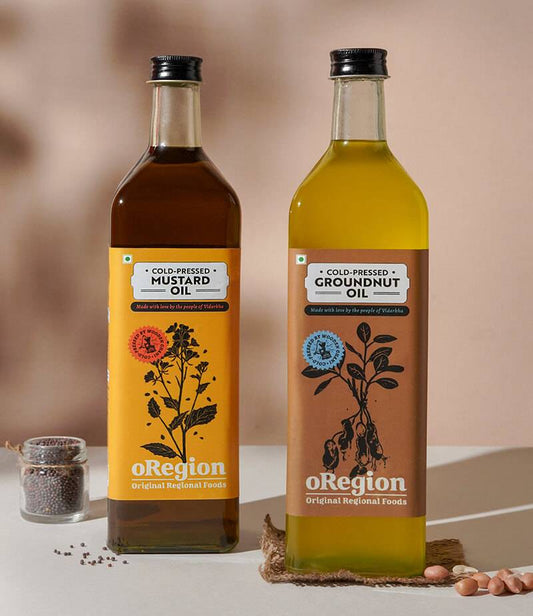
Based on these criteria, cold pressed groundnut oil, Cold Pressed Mustard Oil (Kachi Ghani Mustard Oil), and Cold Pressed sesame oil stand out as the most reliable options for deep frying in Indian kitchens.
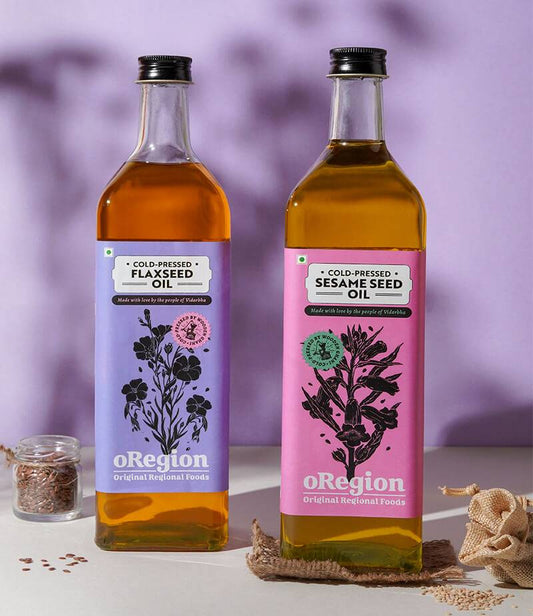
For omega-3 balance and heart nourishment, Cold Pressed Flaxseed Oil (Alsi Ka Tel) is unmatched, but it is not suitable for deep frying due to its delicate structure and low smoke point.
Why Deep Frying Oils Matter for Heart Health
Deep frying typically occurs between 170–190°C. At this temperature, unstable oils undergo oxidation, polymerization, and molecular breakdown. This process creates compounds that directly burden the cardiovascular system.
When poor-quality or refined oils are used, the following risks increase significantly:
-
Formation of toxic aldehydes
-
Rise in free radical load
-
Increase in inflammatory markers
-
Negative impact on LDL cholesterol
-
Accelerated arterial stress
Contrary to popular belief, refined oil does not mean clean oil. Refining strips away protective nutrients like vitamin E, phytosterols, and polyphenols, leaving behind an oil that is structurally weak under heat.
This is why non refined oil, organic cold pressed oil, and chemical free oil are becoming essential in health-conscious households.
Read More: Always Bloated? SIBO Could Be the Real Reason
What Is Cold Pressed Oil and Why Is It Better?
Cold Pressed oil is produced using traditional oil extraction techniques, in which seeds are slowly crushed at controlled, low temperatures, typically below 30-40°C. This method is widely known as wood pressed oil, chekku oil, or ghanighani extraction, and it avoids excessive heat, pressure, or chemical solvents.
Because the oil is not exposed to industrial heat or refining agents, its natural molecular structure remains intact. This preservation is critical. Fats are sensitive molecules, and once their structure is altered, they can shift from being protective to harmful. Cold pressing ensures the oil retains its original fatty acid configuration, enzymes, antioxidants, and fat-soluble vitamins.
From a nutritional standpoint, cold pressed oil offers long-term oxidative stability, meaning it resists breakdown during cooking far better than refined alternatives. This stability directly translates to lower inflammation, better lipid metabolism, and improved cardiovascular resilience when used regularly.
Cold Pressed Oil vs Refined Oil – The Real Difference
|
Cold Pressed Oil |
Refined Oil |
|
Extracted at low temperature |
Processed at very high heat |
|
No chemical solvents |
Hexane & industrial chemicals |
|
Retains nutrients |
Nutrients destroyed |
|
Natural aroma & flavour |
Deodorised and neutral |
|
Antioxidant-stable |
Oxidation-prone |
Refined oils are subjected to bleaching, deodorisation, degumming, and solvent extraction, all of which weaken the oil’s natural defence system. While refined oils may look clear and neutral, they are structurally fragile and degrade quickly under heat.
In contrast, cold pressed oil benefits include:
-
Improved cholesterol balance
-
Reduced oxidative stress
-
Better arterial elasticity
-
Lower inflammatory response
Read More: How oRegion Preserves Nutrition in Cold Pressed Oils
Smoke Point and Stability – The Science Behind Safe Frying
Understanding Smoke Point
The smoke point is the temperature at which oil begins to smoke, degrade, and release toxic by-products such as aldehydes and free radicals. Oils that reach this stage quickly are unsafe for deep frying.
However, smoke point alone is not enough. Stability under sustained heat is equally important.
For safe frying, an oil must be:
-
High in monounsaturated fats (MUFA)
-
Naturally antioxidant-rich
-
Resistant to oxidative breakdown
-
Free from prior chemical damage
Best Oils for Deep Frying
When we evaluate oils for deep frying, we must look beyond marketing claims and focus on fatty acid composition, oxidative stability, antioxidant content, and traditional usage evidence. Deep frying exposes oil to prolonged temperatures close to 180–190°C, and only structurally stable oils can withstand this without degrading into harmful compounds.
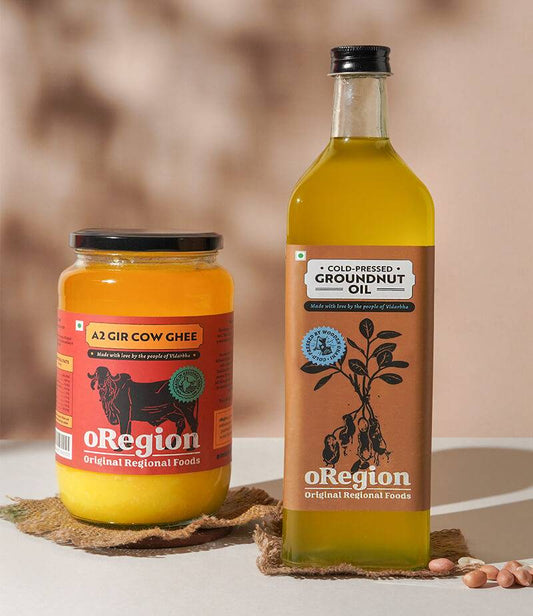
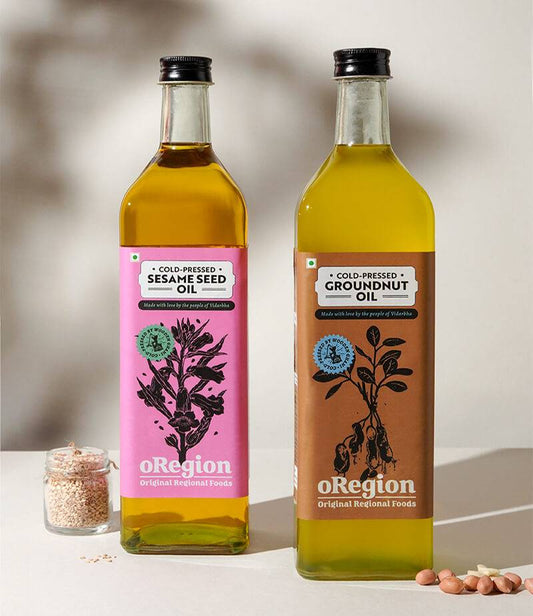
Cold Pressed Groundnut Oil
Cold pressed groundnut oil has consistently proven itself as one of the safest and most reliable oils for deep frying, both scientifically and traditionally. Its naturally high smoke point and dominant Monounsaturated Fatty Acid (MUFA) profile make it exceptionally resistant to heat-induced oxidation.
Unlike refined oils, wood pressed groundnut oil retains vitamin E and natural antioxidants that actively protect the oil during frying. This means less formation of aldehydes, fewer free radicals, and greater cardiovascular safety when used correctly.
Cold Pressed Mustard Oil
Cold Pressed Mustard Oil, especially kachi ghani mustard oil, has been used for high-heat cooking across Indian households for generations. Its strength lies in its unique fatty acid structure, which includes a balanced mix of MUFA, PUFA, and natural omega-3 fatty acids.
Additionally, mustard oil contains allyl isothiocyanates, compounds that improve oxidative resistance and enhance oil stability during deep frying. When properly heated to reduce its initial pungency, cold pressed mustard oil becomes thermally stable and heart-supportive.
Cold Pressed Sesame Oil
Cold Pressed sesame oil occupies a unique middle ground. It may not tolerate extremely high heat like groundnut oil, but its natural antioxidants, sesamol and sesamin—provide strong protection against oxidative damage. This makes cold pressed sesame oil suitable for medium to moderately high-heat frying, sautéing, and shallow frying.
Oils to Avoid for Deep Frying
Not all oils are designed to face extreme heat. Some oils are nutritionally powerful but structurally fragile, making them unsafe for frying.
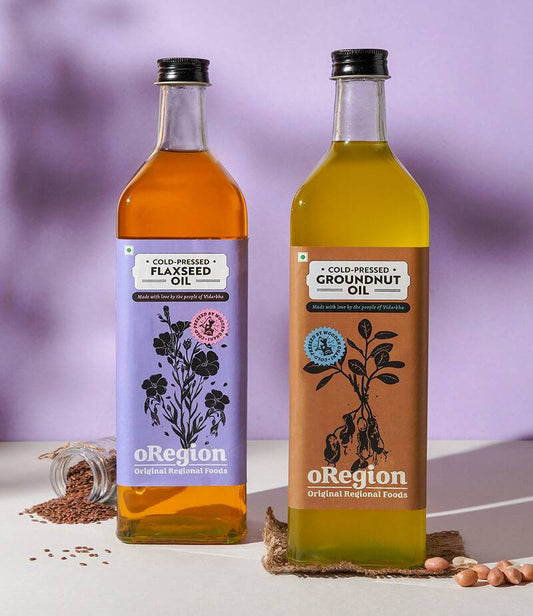
Flaxseed Oil and Virgin Omega-3 Oils
Flaxseed oil, also known as alsi ka tel, flax oil, or oil from flax, is extremely rich in omega-3 fatty acids. However, omega-3 fats are highly heat-sensitive. When exposed to frying temperatures, they break down rapidly and lose their health benefits while forming harmful oxidation products.
This is why virgin flaxseed oil, cold pressed flaxseed oil, vegan omega-3 oil, and omega-3 rich oil should never be used for frying.
Repeatedly Reheated Oil
Even the best cold pressed oil becomes harmful when reused multiple times. Reheating causes molecular breakdown, leading to trans-fat formation, oxidative stress, and chronic inflammation, which directly impacts heart health.
Read More: Flaxseed Oil Guide: Usage, Timing and Daily Dosage
Cold Pressed Groundnut Oil – The Traditional Frying Champion
Groundnut oil, commonly known as peanut cooking oil, has remained a pillar of Indian cooking not merely due to taste, but due to biochemical superiority.
Why It Excels in Deep Frying
Cold Pressed Groundnut Oil naturally has a high smoke point, allowing it to maintain structural integrity even during prolonged frying. Its MUFA-rich profile ensures slow oxidation, while its mild flavour preserves the natural taste of food.
Because it is less prone to polymerisation, food fried in groundnut oil absorbs less degraded fat, making it safer for regular consumption.
Groundnut Oil Benefits
Regular use of pure groundnut oil supports cardiovascular health by maintaining healthier LDL–HDL cholesterol ratios. It is stable for daily cooking, gentle on digestion, and naturally rich in vitamin E, which further enhances oxidative protection.
For optimal health benefits, we always recommend wood pressed groundnut oil, ensuring it is non-refined, chemical-free, and traditionally extracted.
Read More: India's oil consumption doubled As per NITI Aayog Data
Cold Pressed Mustard Oil: The Heart-Friendly Indian Classic
Cold pressed mustard oil, often referred to as sarso tel, holds a respected place in Ayurvedic nutrition. Its warming nature stimulates digestion and circulation, making it especially valuable in traditional Indian diets.
Why Kachi Ghani Mustard Oil Is Superior
Kachi ghani mustard oil is extracted at low temperatures, preserving its natural omega-3 fatty acids, phytosterols, and bioactive compounds. The presence of allyl isothiocyanates gives it antimicrobial properties while also improving lipid metabolism.
Is Mustard Oil Safe for Deep Frying?
Yes, when used correctly. Heating cold pressed mustard oil until its sharp pungency reduces allows the oil to stabilise. Once stabilised, it performs exceptionally well for deep frying and heavy cooking. Used in moderation, it is considered one of the best oils for heart health in traditional diets.
Sesame Oil – The Underrated Frying Oil
Sesame oil, or til oil, is often overlooked despite its impressive antioxidant profile. Cold pressed sesame oil contains sesamol and sesamin, compounds that actively protect fats from oxidative breakdown.
Sesame Oil Benefits
These antioxidants help protect cells from oxidative stress, support cardiovascular function, and promote metabolic balance. In Ayurvedic cooking traditions, sesame oil is valued for its nourishing and grounding properties.
Cold Pressed cold pressed sesame oil performs particularly well for medium-heat frying and sautéing, where antioxidant protection plays a more critical role than extremely high smoke points.
Flaxseed Oil – The Ultimate Omega-3 Oil (Not for Frying)
Flaxseed oil is one of the most potent vegan omega-3 oil sources available. Known as alsi tel, flax seed oil, or cold pressed flax oil, it is especially valued for daily nutritional balance rather than cooking.
Flaxseed and Omega-3 Profile
Flaxseed oil is extremely rich in alpha-linolenic acid (ALA), a plant-based omega-3 fatty acid that supports vascular elasticity, heart rhythm regulation, and inflammatory balance.
Flaxseed Oil Benefits
Cold pressed flaxseed oil benefits include reduced systemic inflammation, hormonal balance support, improved skin elasticity, and stronger hair health. These benefits make it particularly valuable for flaxseed benefits for women.
Why Flaxseed Oil Should Never Be Heated
Flaxseed oil has a very low smoke point, and heating destroys its omega-3 content almost instantly. Once heated, it loses its therapeutic value and becomes oxidatively unstable.
How to Use Flaxseed Oil Correctly
Flaxseed oil should always be consumed raw. It works best as a salad dressing, mixed into food after cooking, or taken directly in small quantities. Proper storage in dark glass bottles is essential, and the oil should never be reused or exposed to heat.
How Reheated Oils Damage the Heart
Repeated heating of any oil causes trans-fat formation, increased free radicals, oxidative stress, and chronic inflammation. These compounds are directly linked to arterial damage and metabolic disorders.
Fresh oil use is non-negotiable when heart health is a priority.
Read More: The Forgotten Truth About Cooking Oils
Why Choose Organic Cold Pressed Oil Over Refined Oil?
Organic cold pressed oil remains nutrient-dense, aromatic, and structurally intact because it avoids bleaching, deodorisation, and solvent extraction. Refined oils lose these protective qualities during industrial processing, making them less stable under heat and more inflammatory over time.
How to Identify Pure Cold Pressed Oil
Identifying a genuine cold pressed oil requires attention to more than just front-label claims. True cold pressed oil is extracted using slow mechanical pressure at low temperatures, without chemical solvents, industrial heat, or refining agents. This extraction method preserves the oil’s natural fatty acid structure, antioxidants, enzymes, and fat-soluble vitamins, which are essential for long-term heart and metabolic health.
A pure cold pressed oil will clearly mention “cold pressed” or “wood pressed” on its label. Words such as refined, light, neutral, deodorised, or Cold Pressed through chemicals should be absent. Authentic oils retain a natural aroma and flavour, which may vary slightly from batch to batch due to seasonal seed quality—this variation is actually a sign of purity, not inconsistency.
Packaging also plays a critical role. High-quality cold pressed oil is typically stored in dark glass bottles or food-grade steel containers, which protect it from light-induced oxidation. Transparent plastic bottles often accelerate degradation and are rarely used by serious producers.
Another key indicator is the transparency of sourcing. Brands that disclose seed origin, harvest cycles, extraction method, and shelf-life limitations demonstrate accountability. Cold pressed oil is not designed for long storage; shorter shelf life often indicates minimal processing and zero chemical intervention, which is precisely what we want.
Read More: How to Identify Pure Cold Pressed Oil
Choosing the Right Cold Pressed Oil Brand
Selecting the Best Cold Pressed Oil Brand in India requires a deeper evaluation beyond price comparisons or attractive packaging. A trustworthy brand prioritizes traditional extraction integrity over industrial scale, ensuring oils are produced in small batches using wood pressed or slow rotary extraction rather than high-speed machines that generate heat.
One of the most important factors is zero blending. Many commercial oils marketed as cold pressed are quietly mixed with refined oil to stabilize cost and shelf life. A genuine brand avoids this practice entirely and allows the oil’s natural characteristics to speak for themselves.
Honest pricing is another indicator of authenticity. Cold pressed oil requires more raw material, time, and care to produce. Unrealistically low prices often signal shortcuts in extraction or dilution. Ethical brands price their oils transparently, reflecting the true cost of quality.
Consumer trust is built through consistency, clear labelling, and education. Brands that openly explain why certain oils are unsuitable for frying, why some oils have shorter shelf lives, or why aroma varies seasonally demonstrate nutritional responsibility rather than marketing exaggeration.
At oRegion, we focus on purity, slow extraction, and nutritional authenticity. Our oils are crafted using traditional methods that protect natural antioxidants and fatty acids. We design our oils to nourish the heart, protect metabolic health, and support long-term wellness, not merely to serve as a cooking medium.
Final Thoughts – Fry Smart, Live Strong
Deep frying itself does not damage the heart. Incorrect oil selection does.
When we choose pure cold pressed oil, rotate oils based on cooking purpose, avoid reheating, and respect traditional wisdom validated by modern nutritional science, we significantly reduce oxidative stress and inflammatory load on the body. The result is improved heart health, better metabolic balance, and sustained vitality over time.
Traditional oils produced through slow pressure extraction preserve nutrients that industrial refining irreversibly destroys. These oils work with the body’s natural systems rather than against them.
Choosing the right oil is not a short-term dietary trend or a marketing decision. It is a long-term investment in cardiovascular health, cellular protection, and generational well-being. Fry smart, eat consciously, and let your cooking oil support your health—not compromise it.
Follow us for more wellness tips
👉 Buy Now on oregion.in
📸 Instagram: @oRegion.in
📘 Facebook: facebook.com/oRegionfoods
▶ YouTube: https://www.youtube.com/@oRegion_foods