


How oRegion Preserves Nutrition Using Traditional Methods: Authentic Cold Pressed Oils Without Chemicals
By oregion foodsIf you're looking for a truly authentic Cold Pressed Oil, the extraction method matters just as much as the seeds themselves.
At oRegion, every batch is produced using slow-speed mechanical pressing under controlled low temperatures, without chemical solvents, bleaching agents, deodorization, or high-heat refining. This gentle extraction process helps preserve the oil's naturally occurring Vitamin E, essential fatty acids, antioxidants, and the original aroma of the seeds. To support these production standards, our oils are also backed by laboratory testing, including pesticide residue analysis where applicable.
At a Glance
-
Slow mechanical cold pressing to minimise heat exposure
-
No hexane or petroleum-based solvent extraction
-
No bleaching or artificial colour correction
-
No deodorization that removes the oil's natural aroma
-
Naturally occurring nutrients are retained through careful processing
-
Laboratory-tested quality for greater transparency
-
Traditional principles combined with modern food safety practices
Rather than manufacturing oils for maximum output, we focus on protecting the characteristics that make naturally extracted oils valuable in everyday nutrition.
Why This Matters More Than Ever
Cooking oil is one of the few foods consumed almost every day, yet it is often chosen based on price, appearance, or advertising instead of how it is produced.
Many people compare brands by colour, packaging, or shelf life without asking a more important question:
What happened to the oil before it reached the bottle?
That single question determines whether the oil still contains many of the naturally occurring compounds present in the original seeds.
Over the past few decades, industrial food production has prioritised speed, uniformity, and long shelf life. While these goals improve manufacturing efficiency, they often involve processing methods such as high-temperature refining, chemical solvent extraction, bleaching, and deodorization. These steps create oils that appear clean and consistent, but they also change the oil from its natural state.
As consumers become more informed about food quality, interest in traditionally produced oils has grown significantly. People are no longer searching only for cooking oils—they want to understand how those oils are made, what processing methods are used, and whether the final product still reflects the nutritional qualities of the original seed.
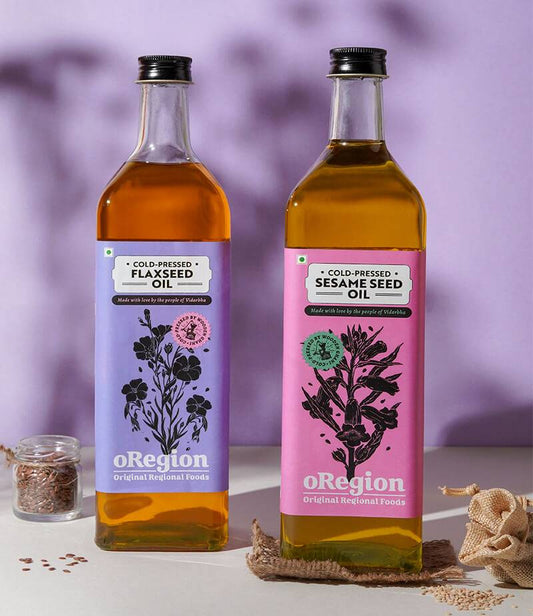
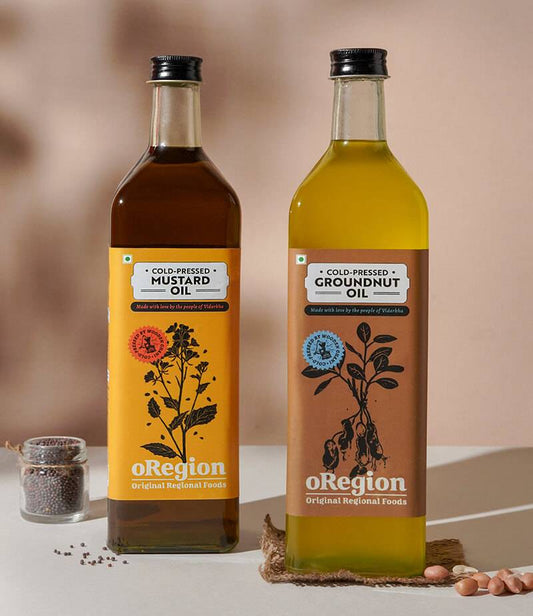
This shift explains why terms such as Cold Pressed Oil, Cold Pressed Mustard Oil, Cold Pressed Groundnut Oil, Cold Pressed Flaxseed Oil, Cold Pressed Linseed Oil, and Cold Pressed Sesame Oil continue to attract growing attention from health-conscious households.
However, one important misconception still exists.
Many people assume that every bottle labelled "cold pressed" is produced using the same standards.
In reality, the phrase Cold Pressed Oil describes a production method, but the quality of that method depends on several practical factors, including extraction speed, temperature control, raw material quality, hygiene standards, storage conditions, filtration practices, and quality verification after production.
Two oils may both carry the words "cold pressed" on the label, yet differ considerably because of how carefully they were produced.
That is why understanding the complete production journey is becoming just as important as choosing the oil itself.
Read More: Quality First: oRegion's Purity Promise in Cold Pressed Oils
Beyond Marketing Claims: Why Production Methods Matter
When consumers choose food today, they increasingly look beyond attractive packaging.
They want evidence.
Questions like these are becoming more common:
-
Was the oil exposed to excessive heat?
-
Were chemical solvents used during extraction?
-
Has the oil been heavily refined?
-
Does it retain its natural aroma?
-
Has the product undergone laboratory testing?
-
Can the brand explain how the oil is actually produced?
These questions reflect a broader change in buying behaviour.
People are no longer satisfied with general claims such as "pure," "natural," or "healthy." They want to understand the process behind those words.
At oRegion, we believe transparency begins long before the bottle reaches your kitchen. Every production decision—from selecting quality seeds to using slow mechanical extraction and maintaining food-grade handling practices—is made to preserve the oil's original character rather than alter it for appearance alone.
This philosophy is rooted in a simple principle:
The less unnecessary processing an oil undergoes, the closer it remains to its natural state.
That doesn't mean every natural characteristic should look identical from one batch to another. Just as seasonal fruits differ slightly in taste and colour, naturally produced oils can also show subtle variations depending on harvest conditions, seed quality, and growing environments.
Rather than treating these natural differences as defects, we see them as signs that the oil has not been excessively standardised through aggressive industrial processing.
The Hidden Story Inside Every Bottle of Cooking Oil
Every bottle of cooking oil represents a series of production choices.
Some manufacturers focus primarily on extracting the highest possible quantity of oil from every kilogram of seed. Others prioritise creating an oil that looks clear and identical on every store shelf.
Our approach begins with a different question:
How can we protect as much of the seed's original integrity as possible?
Answering that question influences every stage of production.
It affects the speed of extraction.
It affects temperature management.
It affects filtration.
It affects storage.
It affects packaging.
Most importantly, it affects what ultimately reaches your kitchen.
Because cooking oil is consumed repeatedly over many years, even small differences in production methods may influence the overall quality of the food people prepare every day. For this reason, preserving natural characteristics is not simply a traditional practice—it is a deliberate production philosophy supported by careful process control and quality verification.
How oRegion Preserves Nutrition: Every Step Matters
Many cooking oil brands describe their products as "natural" or "cold pressed," but very few explain what actually happens between the arrival of the seeds and the moment the oil is sealed inside the bottle.
At oRegion, we believe consumers deserve more than marketing phrases. They deserve a clear understanding of how their cooking oil is produced and why each production decision matters.
Our approach is built on one principle:
Protect the natural qualities of the seed instead of trying to recreate them after processing.
This philosophy influences every stage of production—from seed selection and extraction to filtration, storage, testing, and packaging.
Step 1: Carefully Selected Seeds Are the Foundation of Quality
No extraction method can improve poor-quality raw materials.
The nutritional quality of any Cold Pressed Oil begins with the condition of the seeds themselves. Factors such as moisture, maturity, cleanliness, and storage all influence the final oil.
Before extraction, seeds are selected and prepared to help ensure consistent quality. Attention at this stage helps reduce unwanted impurities and supports better processing outcomes without relying on aggressive refining later.
A well-produced oil is the result of the entire production chain—not only the extraction machine.
Step 2: Slow Mechanical Pressing Instead of High-Speed Extraction
The defining feature of authentic Cold Pressed Oil is not the machine alone—it's the way the extraction process is managed.
At oRegion, oils are extracted using slow mechanical pressing under controlled conditions rather than high-speed industrial processing designed to maximise output.
This slower approach helps reduce unnecessary friction and heat generation during extraction.
Why does that matter?
Natural oils contain delicate compounds that are more sensitive than many people realise. Excessive processing conditions can alter an oil's original characteristics.
By slowing the extraction process, we focus on preserving:
-
The oil's natural aroma
-
Its original seed identity
-
Naturally occurring fat-soluble compounds
-
The authentic flavour expected from each seed
Choosing a slower process also means accepting lower production efficiency compared with aggressive industrial extraction.
For us, preserving quality takes priority over maximising yield.
Why Lower Oil Yield Can Be a Sign of Better Processing
Consumers often assume that producing more oil from the same quantity of seeds is always better.
In reality, higher extraction yield may require more aggressive processing techniques.
Some industrial systems increase output through higher temperatures or additional extraction stages. While these methods recover more oil, they also change how the oil is processed.
Traditional cold pressing follows a different philosophy.
Instead of asking:
"How much oil can we extract?"
The better question is:
"How much of the oil's natural character can we preserve?"
A lower extraction yield is not automatically proof of better quality, but accepting a more moderate yield can be part of a production approach that prioritises gentle handling over maximum output.
Step 3: No Chemical Solvent Extraction
One of the biggest differences between traditionally extracted oils and many industrial oils is the extraction method itself.
Large-scale refining commonly begins with solvent extraction, where food-grade petroleum-derived solvents are used to separate oil from the seed.
Although these solvents are removed during later processing stages, solvent extraction is fundamentally different from mechanical cold pressing.
At oRegion, our oils are extracted mechanically.
This means:
-
No solvent extraction
-
No hexane-based extraction process
-
No chemical shortcuts to increase production volume
The oil is obtained through mechanical pressure rather than chemical separation.
For consumers looking for minimally processed cooking oils, this distinction is one of the most important differences between cold-pressed and conventionally refined oils.
Step 4: No Bleaching or Artificial Colour Adjustment
Many shoppers unknowingly associate lighter colour with higher quality.
In reality, colour alone says very little about how nutritious or authentic a cooking oil is.
Industrial refining often includes bleaching to create a more uniform appearance.
Natural oils don't always look identical.
Harvest season, seed variety, climate, and growing conditions can all influence colour.
Rather than forcing every batch to look the same, oRegion allows each oil to retain its naturally occurring appearance.
This approach reflects the natural variability of agricultural products rather than the uniformity created through extensive industrial processing.
Why Identical Colour Is Not Always a Sign of Authenticity
Nature rarely produces perfect uniformity.
Just as mangoes from different seasons vary slightly in sweetness and colour, oilseeds also vary from one harvest to another.
As a result, genuine Cold Pressed Mustard Oil, Groundnut Oil, Sesame Oil, or Flaxseed Oil may show subtle differences between batches.
These small variations can occur because of:
-
Seasonal growing conditions
-
Soil composition
-
Seed maturity
-
Natural moisture levels
-
Harvest timing
Consumers often expect every bottle to look exactly alike.
In reality, slight natural variation may indicate that the oil has not been aggressively standardised through refining.
Step 5: Natural Aroma Is Preserved
One of the easiest ways to recognise minimally processed oil is its aroma.
Every seed has its own distinctive natural fragrance.
Industrial deodorization removes much of this aroma to create a neutral oil suitable for mass production.
Cold pressing takes a different approach.
Instead of removing the oil's natural identity, gentle extraction helps preserve the characteristic aroma associated with the original seed.
That is why authentic Cold Pressed Mustard Oil has its familiar pungency, while Groundnut Oil, Cold Pressed Sesame Oil, and Flaxseed Oil each retain their own recognisable sensory profile.
A natural aroma is not a manufacturing defect—it is part of the oil's identity.
Why Aroma May Change Slightly Throughout the Year
Consumers sometimes believe that every bottle should smell the same.
Agriculture doesn't work that way.
Natural aroma can vary because of:
-
Rainfall during the growing season
-
Soil minerals
-
Seed freshness
-
Harvest timing
-
Storage conditions before pressing
These factors influence the volatile compounds naturally present in the seeds.
Minor seasonal differences do not necessarily indicate inconsistent quality. They are part of working with real agricultural ingredients rather than heavily standardised industrial raw materials.
Step 6: Natural Filtration Instead of Over-Processing
After extraction, oil contains microscopic seed particles.
Industrial refining often removes nearly everything suspended in the oil to create a crystal-clear appearance.
Cold pressed oils are handled differently.
Rather than aggressively refining away every naturally occurring particle, gentle filtration helps maintain the oil while removing unwanted impurities.
Because of this, some authentic cold pressed oils may develop light natural sediment over time.
This is different from spoilage.
Sedimentation simply reflects that the oil has undergone minimal processing.
Why Sedimentation Can Vary Between Bottles
Not every bottle develops the same amount of natural sediment.
This variation depends on several practical factors, including:
-
Seed variety
-
Natural particle size
-
Filtration timing
-
Storage conditions
-
Length of settling before bottling
These differences are expected in traditionally processed oils and should be interpreted alongside the product's storage instructions and shelf-life guidance.
Step 7: Laboratory Verification Supports Product Quality
Traditional production methods and modern quality systems work best when used together.
At oRegion, quality is supported not only by careful processing but also by laboratory verification where appropriate.
One example is our Cold Pressed Groundnut Oil, which underwent pesticide residue screening through an independent laboratory.
Example of Laboratory Screening
| Quality Parameter | Result |
|---|---|
| Product Tested | Cold Pressed Groundnut Oil |
| Pesticide Compounds Screened | 150+ |
| Detectable Pesticide Residues | Below Limit of Quantification (BLQ) |
| Purpose of Testing | Product quality verification |
Laboratory reports provide measurable data that complements production practices. Instead of relying solely on broad marketing claims, documented testing offers an additional level of transparency for consumers.
Why Traditional Knowledge and Modern Testing Work Better Together
Traditional oil extraction methods have been valued for generations because they emphasise gentle processing.
Modern laboratory testing adds another layer by helping verify important quality parameters.
At oRegion, we do not see these approaches as opposites.
Traditional production guides how the oil is made.
Laboratory testing helps verify what reaches the consumer.
Together, they support a production philosophy built on transparency, consistency, and respect for the original qualities of the seed.
Frequently Asked Questions (FAQs)
1. Which cold-pressed oil is rich in plant-based Omega-3?
Cold-pressed Flaxseed Oil is one of the richest natural plant-based sources of alpha-linolenic acid (ALA), an essential omega-3 fatty acid. It is commonly chosen by people looking for a vegetarian or vegan omega-3 source.
2. Is cold-pressed mustard oil good for traditional Indian cooking?
Yes. Cold-pressed mustard oil has been used in Indian kitchens for generations because of its distinctive flavour and suitability for many traditional recipes. Its natural pungency is retained through gentle cold pressing.
3. Why does oRegion use slow-speed pressing?
Slow-speed pressing helps minimise unnecessary heat generated during extraction. This gentle approach supports the preservation of the oil's natural aroma, flavour, and original characteristics.
4. Should I choose Cold Pressed Oil based only on colour?
No. Colour alone does not indicate quality or purity. The extraction process, production standards, laboratory testing, and transparency provide a more reliable way to evaluate authentic Cold Pressed Oil.
5. Why choose oRegion Cold Pressed Oils?
oRegion combines traditional cold pressing principles with modern quality verification. By avoiding chemical refining and focusing on careful production, we provide Cold Pressed Mustard Oil, Groundnut Oil, Flaxseed Oil, Linseed Oil, and Sesame Oil that reflect their natural seed characteristics.
6. Is cold-pressed oil suitable for everyday cooking?
Yes. Different cold-pressed oils are suitable for different cooking styles. Cold Pressed Mustard Oil and Cold Pressed Groundnut Oil are commonly used for everyday Indian cooking, while Cold Pressed Flaxseed Oil is generally recommended for raw consumption.
7. Why does authentic Cold Pressed Oil have a natural aroma?
Natural aroma comes directly from the original oilseed. Unlike refined oils, authentic Cold Pressed Oil is not deodorized, allowing it to retain the characteristic fragrance of mustard, sesame, groundnut, or flaxseed.
8. Is sedimentation a sign of pure cold-pressed oil?
Natural sedimentation can occur in minimally processed oils because they are not heavily refined. While sediment alone does not guarantee purity, it is commonly seen in authentic Cold Pressed Oils that undergo gentle processing.
Conclusion: Why oRegion Cold Pressed Oils Stand Apart
Cold pressed oil is about biological integrity—respecting how fats function inside the human body. Oils extracted slowly, without chemicals, and verified through rigorous testing nourish rather than burden the system.
If you seek:
-
Authentic cold pressed oils
-
Truly chemical-free cooking oil
-
Trusted flaxseed, mustard, groundnut, and sesame oils
oRegion delivers purity you can taste—and nutrition you can trust, every single day.
Follow us for more wellness tips
👉 Buy Now on oregion.in
📸 Instagram: @oRegion.in
📘 Facebook: facebook.com/oRegionfoods
▶ YouTube: https://www.youtube.com/@oRegion_foods