


The Future of Pure Food: How Natural Diets Are Challenging the Processed Food Industry
By oregion foodsFor decades, convenience quietly reshaped how India ate. Refined oils replaced traditional fats, packaged foods entered everyday kitchens, and shelf life began to matter more than nutritional life. What once came fresh from farms and local presses was replaced by industrial efficiency.
Today, that narrative is changing.
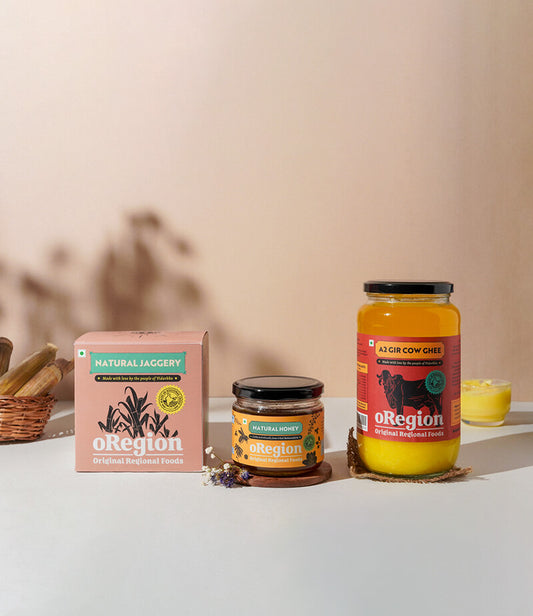
Across urban and rural India, families are questioning what goes into their food, where it comes from, and how it affects their long-term health. This awakening is not driven by trends or influencers—it is driven by lived experience. And at the heart of this shift is a return to pure, natural, minimally processed food, championed by brands like oRegion, committed to preserving India’s food wisdom.
The Future of Pure Food in a Processed World
How India’s Food Choices Were Shaped by Convenience
From Traditional Kitchens to Ultra-Processed Shelves
Indian kitchens once relied on Cold Pressed Oil, bilona ghee, raw honey, and seasonal grains. Oils like cold pressed mustard oil, til ka tel, and groundnut oil were extracted locally using wooden or slow mechanical methods. These foods carried flavour, nutrition, and cultural identity.
The industrial era disrupted this balance. Refined oils, ultra-processed snacks, and long ingredient lists promised affordability and ease—but silently removed nutrition from daily diets.
When Shelf Life Replaced Nutritional Life
Modern processing prioritises stability over vitality. Hydrogenation, deodorisation, bleaching, and chemical refining strip oils and foods of natural enzymes and micronutrients. What remains looks edible but behaves differently in the body.
Why Consumers Are Questioning the Processed Food Industry
“What Am I Really Eating?” – The Question Changing India
Rising Lifestyle Disorders and Food Quality Concerns
The rise in obesity, diabetes, PCOS, thyroid imbalance, and heart disease has forced families to examine everyday staples. Refined oils and packaged foods now face scrutiny for their role in chronic inflammation and metabolic imbalance.
The Hidden Cost of Refined Oils and Packaged Foods
Cheap pricing often hides expensive consequences. Highly processed foods increase healthcare costs, reduce energy levels, and disconnect consumers from the source of their nourishment.
The Real Problem With Processed Food We Normalised
What Heavy Processing Does to Food and Health
Loss of Natural Enzymes, Nutrients, and Bioavailability
When oils are refined, omega fatty acids, antioxidants, and natural phytochemicals are destroyed. This is why cold pressed flaxseed oil benefits differ drastically from refined flax oil.
Chemical Additives, Preservatives, and Artificial Flavours
Artificial flavours, stabilisers, and preservatives extend shelf life but burden the liver and gut over time.
How Processed Food Disconnects Us From Soil and Source
Processed food removes the story of food—who grew it, how it was extracted, and why it nourishes.
Why Natural Diets Are Making a Strong Comeback
Rediscovering India’s Traditional Food Wisdom
Minimal Processing and Short Ingredient Lists
Natural foods thrive on simplicity. Single-ingredient oils, raw honey, and ghee made using traditional methods are easy to recognise and digest.
Region-Specific and Seasonal Eating Habits
Mustard oil in the north, Cold Pressed sesame oil in the south, groundnut oil in western India—regional diets evolved for climate and digestion.
Chemical-Free Farming and Natural Extraction Methods
Practices like Zero Budget Natural Farming (ZBNF) restore soil health and nutritional density.
Cold-Pressed Oils as the Backbone of Natural Nutrition
What Cold Pressed Oil Means in Real Terms
Cold pressed oil is extracted without heat or chemicals, preserving natural fats, aroma, and nutrients.
Cold Pressed Oil vs Wood Pressed Oil – Understanding the Difference
While both avoid chemical refining, wood pressed (chekku oil) relies on traditional wooden ghani, whereas cold pressing uses modern slow-speed presses. Both prioritise nutrition over volume.
Cold Pressed Oil Benefits for Long-Term Health
-
Better fat absorption
-
Reduced inflammation
-
Improved heart health
-
Balanced omega ratios
Cold Pressed Flaxseed Oil – The Omega-3 Powerhouse
Why Flaxseed and Omega 3 Are Essential for Modern Diets
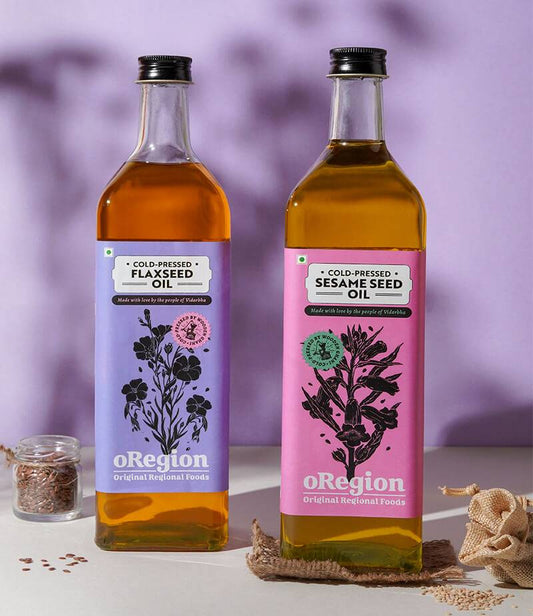
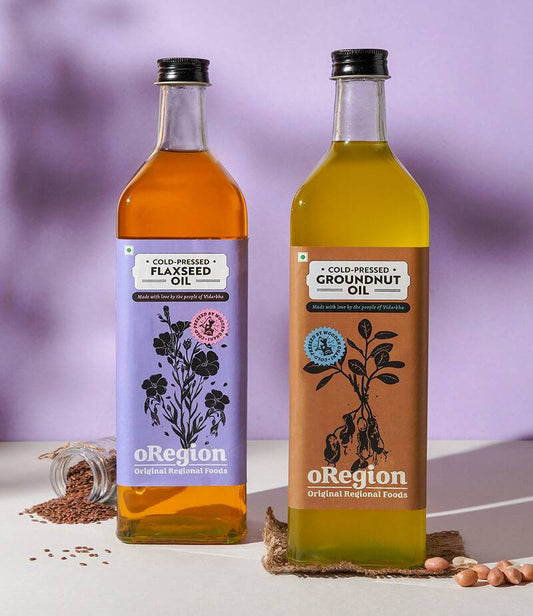
Flaxseed oil (also called flax oil, linseed oil, alsi ka tel) is among the richest plant-based omega 3 sources, making it ideal as a vegan omega 3 oil.
Cold Pressed Flaxseed Oil Benefits for Female Health
Regular use supports:
-
Hormonal balance
-
PCOS management
-
Skin elasticity
-
Bone health
Vegan Omega 3 and Flax Oil as an Olive Oil Alternative
For Indian kitchens, cold pressed flax oil works as a superior olive oil replacement—locally sourced and nutritionally aligned.
Best Cold Pressed Flaxseed Oil in India – What to Look For
Organic Cold Pressed Flaxseed Oil vs Refined Flax Oil
Organic, cold pressed oils retain:
-
Alpha-linolenic acid (ALA)
-
Natural antioxidants
-
Fresh nutty aroma
How to Use Flaxseed Oil for Maximum Benefits
Flaxseed Oil Usage for Daily Nutrition
Use raw—drizzle over salads, curd, or smoothies.
Cold Pressed Flaxseed Oil for Hair and Skin
Massage gently for scalp nourishment and skin repair.
Cost, Quality, and Transparency in Flaxseed Oil
Understanding the Cost of Flaxseed Oil in India
Cold Pressed Flaxseed Oil Price vs Refined Oil Price
Cold pressed oils cost more due to:
-
Low yield
-
Fresh batches
-
No chemical shortcuts
Why Best Flaxseed Oil Brands in India Cost More
Quality sourcing, small-batch pressing, and glass packaging increase integrity—not margins.
Mustard Oil’s Return as a Clean Cooking Essential
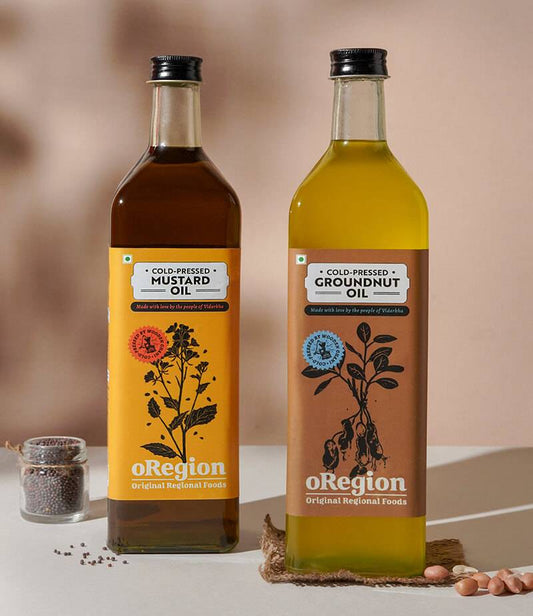
For generations, mustard oil was the backbone of Indian kitchens—especially in North, East, and Central India. Its sharp aroma, warming nature, and digestive strength made it ideal for Indian cooking styles. Over time, refined vegetable oils pushed mustard oil out, branding it as “too strong” or “old-fashioned.” Today, with rising health awareness, cold pressed mustard oil is reclaiming its rightful place as a clean, functional cooking fat.
Cold Pressed Mustard Oil vs Refined Mustard Oil
The difference between cold pressed and refined mustard oil lies in how much the oil is altered before it reaches your plate.
Refined mustard oil undergoes high heat, chemical solvents, deodorisation, and bleaching. These processes strip the oil of its natural MUFA (monounsaturated fats), antioxidants, and bioactive compounds.
In contrast, cold pressed mustard oil is extracted at low temperatures without chemicals. This preserves:
-
Natural fatty acid balance
-
Allyl isothiocyanate (responsible for antimicrobial action)
-
Authentic pungency and colour
This makes cold pressed mustard oil not just a cooking medium, but a functional food.
Cold Pressed Kachi Ghani Mustard Oil Explained
Kachi ghani mustard oil refers to oil extracted using traditional low-temperature pressing methods. This oil retains its signature pungency, which is a sign of purity—not harshness. Scientifically, this pungency indicates the presence of natural sulfur compounds that support gut health and help fight harmful bacteria.
Kachi ghani mustard oil also contains:
-
Omega-3 and omega-6 in balanced proportions
-
Natural MUFA that supports heart health
-
Antimicrobial and anti-inflammatory properties
Wood Pressed Mustard Oil Benefits for Indian Cooking
Wood Pressed Mustard Oil (chekku oil) is especially suited for Indian cooking because it remains stable at higher temperatures. Unlike refined oils that break down and form harmful compounds, wood pressed mustard oil:
-
Maintains structural integrity during deep cooking
-
Enhances flavour without overpowering dishes
-
Supports digestion when used regularly
This makes it ideal for tadka, sabzi, curries, and traditional recipes.
Choosing the Best Cold Pressed Mustard Oil Online
With many brands claiming purity, choosing the right oil requires awareness.
Cold Pressed Mustard Oil Price and Purity Indicators
A genuine cold pressed mustard oil:
-
Has a strong, natural aroma
-
May show mild sediment (a sign of minimal filtration)
-
Mentions harvest season and sourcing transparency
Cheaper prices usually indicate blending or refining. Quality mustard oil costs more because it yields less oil per batch and avoids shortcuts.
Benefits of Cold Pressed Mustard Oil for Skin and Heart
Cold pressed mustard oil improves:
-
Blood circulation, supporting heart health
-
Skin immunity, especially in dry climates
-
Joint flexibility when used externally
Its warming nature makes it particularly beneficial in Indian weather conditions.
Sesame and Groundnut Oils in Traditional Indian Diets
India’s traditional diets evolved around region-specific oils, each chosen for climate, digestion, and cooking needs.
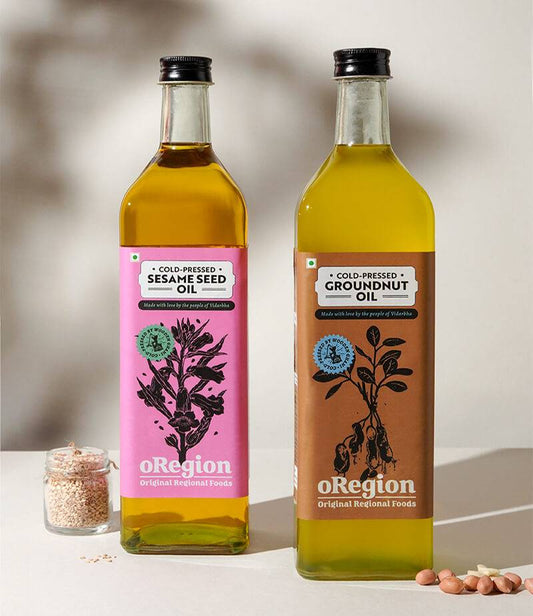
Cold Pressed Sesame Oil (Til Ka Tel) for Cooking and Hair
Sesame oil, also known as gingelly oil or til oil, is one of the oldest edible oils known to mankind. In Ayurveda, it is considered tridoshic, meaning it balances all three doshas.
Gingelly Oil Benefits and Regional Usage
Cold pressed sesame oil is widely used in South India for cooking and in Ayurveda for:
-
Detox therapies
-
Joint lubrication
-
Hair and scalp nourishment
It is rich in sesamol and sesamin, antioxidants that protect cells from oxidative stress.
Benefits of Cold Pressed Groundnut Oil
Groundnut oil has been a staple in western and central India due to its light texture and neutral flavour.
Best Groundnut Oil for Cooking Indian Meals
Cold pressed groundnut oil is:
-
Naturally stable
-
Rich in vitamin E
-
Easy to digest
It suits everyday Indian cooking without overpowering flavours.
Groundnut Oil oRegion and Farmer-First Sourcing
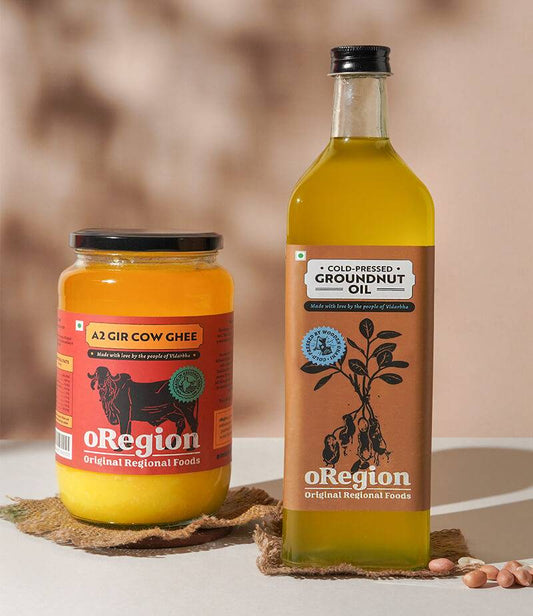
When sourced directly from farmers, like oRegion Groundnut Oil, the oil retains freshness and supports sustainable livelihoods. Farmer-first sourcing ensures better seed quality and ethical pricing.
A2 Gir Cow Ghee – The Gold Standard of Healthy Fats
Among all natural fats, A2 Gir cow ghee holds a special place in Indian nutrition.
What Makes A2 Bilona Ghee Different
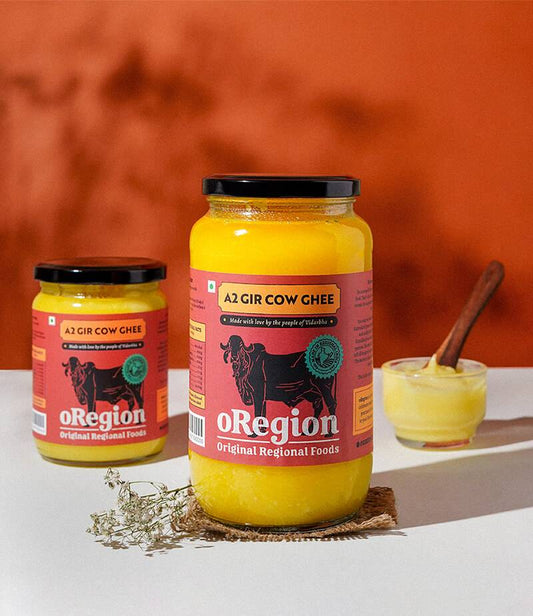
A2 bilona ghee is made from the milk of indigenous Gir cows, following the traditional bilona method—where curd is hand-churned to extract butter before slow heating.
A2 Gir Cow Ghee vs Regular Cow Ghee
Regular ghee often comes from mixed or A1 milk and industrial cream separation. A2 Gir cow ghee contains beta-casein A2 protein, which is easier to digest and less inflammatory.
Traditional Bilona Method and Digestibility
The bilona process preserves:
-
Butyric acid for gut health
-
Vitamins A, D, E, and K
-
Natural aroma and grainy texture
This makes bilona ghee ideal for daily consumption, including for children and elders.
Best A2 Gir Cow Ghee in India – Buying Guide
Price of Gir Cow Ghee and Quality Factors
Authentic A2 ghee costs more due to:
-
Low milk yield of Gir cows
-
Natural grazing and feed
-
Labour-intensive bilona method
Best A2 Cow Ghee Online for Daily Consumption
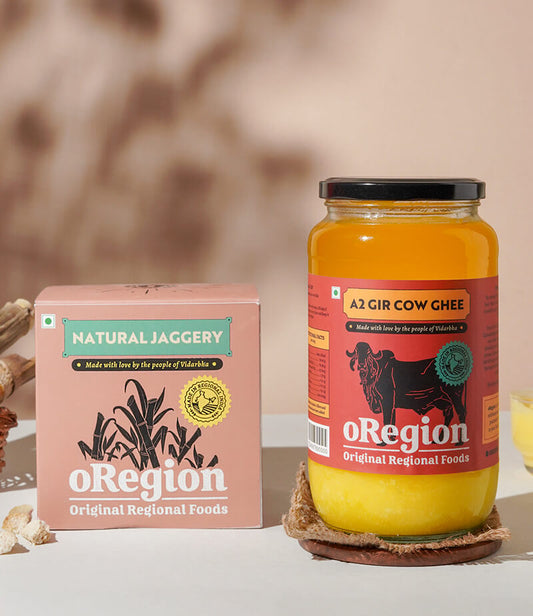
Always choose traceable, small-batch ghee like oRegion Gir Cow Ghee, where purity is prioritised over volume.
Honey, Ghee, and Natural Sweeteners in a Pure Diet
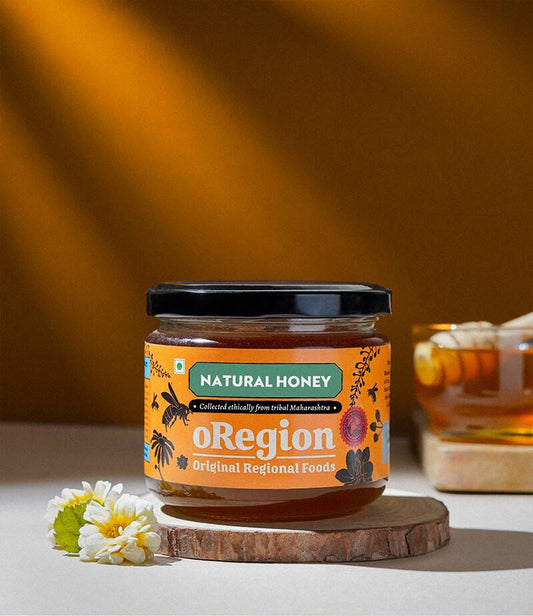
Raw Multiflora Honey vs Processed Honey
Raw honey is unheated and unfiltered, retaining:
-
Natural enzymes
-
Pollen and antioxidants
Processed honey, on the other hand, is often heated and blended with sugar syrups.
How to Identify Pure Honey at Home
Pure honey:
-
Thickens or crystallises naturally over time
-
Has a floral aroma
-
Does not dissolve instantly in water
How to Recognise Original Honey Without Chemicals
Original Honey changes texture with seasons—this is a sign of authenticity, not spoilage.
Honey and Ghee Combo – Ancient Nutrition Explained
Ghee With Honey Benefits According to Ayurveda
When consumed in equal quantity and at the right time, Honey and ghee support:
-
Immunity
-
Digestion
-
Tissue nourishment
Ayurveda warns against heating honey or mixing it improperly.
The Role of Regional Food Systems in the Future of Food
Why Local Sourcing Builds Resilient Food Ecosystems
Local food systems reduce dependency on long supply chains and promote freshness.
Short Supply Chains and Farmer Empowerment
When food travels less:
-
Farmers earn fair prices
-
Consumers get fresher produce
-
Environmental impact reduces
Vidarbha’s Role in India’s Natural Oil Revolution
Vidarbha’s soil and climate make it ideal for cultivating flax, groundnuts, and mustard, supporting India’s cold-pressed oil movement.
Where oRegion Stands in the Natural Food Movement
From Zero Budget Natural Farming to Your Kitchen
oRegion works directly with farmers practising chemical-free, regenerative agriculture.
Traceability From Farm to Bottle
Every product carries transparency—seed source, farming method, and extraction process.
Preserving Native Seeds and Traditional Methods
By protecting indigenous seeds and slow extraction methods, oRegion safeguards India’s food heritage.
Natural Food Is Not a Trend – It’s an Accountability Movement
What Today’s Conscious Consumers Demand
Modern consumers look beyond packaging.
Transparency, Ethics, and Ingredient Honesty
Clean labels matter more than clever claims.
Why Trust Matters More Than Advertising
Trust builds long-term relationships, not temporary sales spikes.
What the Future of Pure Food Looks Like in India
How Natural Diets Are Redefining Convenience
Convenience now means easy digestion and long-term health, not instant cooking.
Nutrition Over Margins
Long-Term Health Over Short-Term Sales
Our Commitment at oRegion
Building India’s Pure Food Ecosystem Responsibly
- Education Over Exaggeration
- Purity With Patience and Purpose
Conclusion: Returning to Food That Respects Life
The future of food in India is not about invention—it is about remembering. Remembering how food was grown, pressed, churned, and shared. As natural diets challenge the processed food industry, the shift is clear: people want food they can trust.
Cold pressed oils, A2 Gir cow ghee, raw honey, and regionally sourced ingredients are not luxuries—they are necessities for sustainable health. Brands like oRegion are not selling products alone; they are restoring accountability to what we eat.
Pure food is not about perfection.
It is about intention, integrity, and impact.
Follow us for more wellness tips
👉 Buy Now on oregion.in
📸 Instagram: @oRegion.in
📘 Facebook: facebook.com/oRegionfoods
▶ YouTube: https://www.youtube.com/@oRegion_foods