

Trans Fat in Ghee? Understanding the Difference Between Natural Trans Fats vs Industrial Trans Fats
By oregion foods"Trans fats detected in our ghee!"
Few statements create more panic among health-conscious families today.
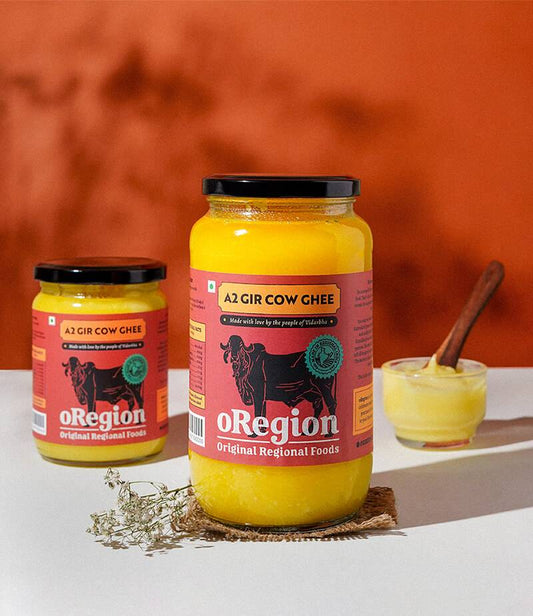
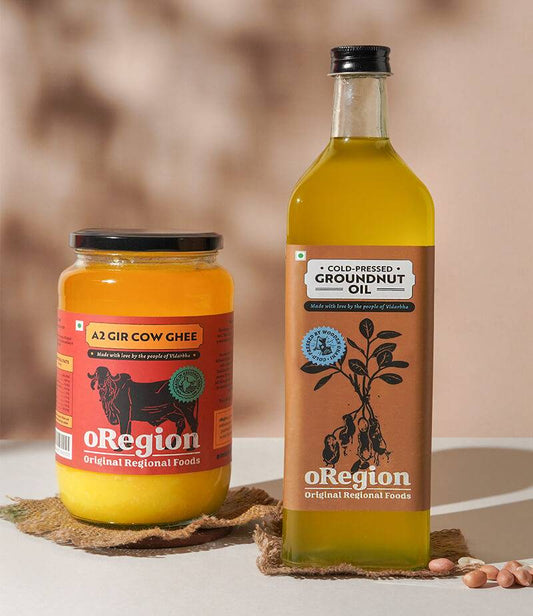
For years, consumers have been told that trans fats are dangerous, linked to heart disease, inflammation, and metabolic disorders. So when a nutrition label on pure A2 Gir Cow Ghee shows 1.71g of trans fat per 100g, many people immediately assume the product contains vanaspati, hydrogenated vegetable oils, or some form of adulteration.
But does the presence of trans fat in ghee automatically mean the ghee is unhealthy or impure?
The answer is no.
In fact, naturally occurring dairy trans fats have existed in milk for thousands of years. They are produced naturally inside the digestive system of cows, buffaloes, goats, and sheep and are chemically and biologically different from the industrial trans fats that health authorities warn us about.
The confusion largely comes from nutrition labels that use the same term — trans fat — for two very different substances.
According to the World Health Organization (WHO)[1], industrially produced trans fats are responsible for 278000 deaths globally every year, leading to worldwide initiatives to eliminate them from food systems. However, these programs specifically target industrial trans fats, not naturally occurring dairy fats.
In this article, we explain the science behind natural vs industrial trans fat, why pure A2 Gir Cow Ghee naturally contains some trans fat, and how consumers can identify genuine purity using tests such as the Baudouin test for ghee adulteration.
Does the Presence of Trans Fat in Ghee Mean It Is Adulterated?
 No, The presence of trans fat in ghee does not mean that the product is adulterated.
Pure dairy fat naturally contains small amounts of naturally occurring trans fatty acids produced during digestion inside ruminant animals such as:
-
Cows
-
Buffaloes
-
Goats
-
Sheep
Therefore, trans fat alone can never be used as evidence of adulteration.
The real concern is whether the trans fat originates from natural dairy metabolism or from industrial hydrogenation processes used to manufacture vanaspati and shortening.
Read More: Ghee Affects Shelf Life and Why Proper Storage Matters
Why Consumers Panic When They See "Trans Fat" on a Ghee Label
Most consumers associate the word trans fat with:
-
Margarine
-
Bakery Shortening
-
Fried Snacks
-
Vanaspati
-
Processed Foods
Seeing the same term on A2 Bilona Ghee labels naturally creates concern.
However, the source of the trans fat matters far more than the name itself.
The Biggest Misunderstanding in Modern Nutrition Labels
Nutrition labels rarely distinguish between:
-
naturally occurring dairy trans fats
-
industrially produced trans fats
As a result, consumers often assume they are identical despite being produced through completely different biological processes.
Read More: What Happens If You Eat Ghee Daily for 30 Days?
What Are Trans Fats and Why Are Health Authorities Concerned About Them?
 Trans fats are unsaturated fats whose molecular structure contains at least one trans double bond.
This structural arrangement changes how the fat behaves inside the body.
WHO's Goal to Eliminate Industrial Trans Fat Worldwide
The WHO launched global initiatives to eliminate industrial trans fats from food supplies because they significantly increase cardiovascular disease risk.
Their focus is specifically on:
-
partially hydrogenated oils
-
industrial shortening
-
vanaspati
-
processed food fats
Natural dairy fats are not the primary target of these elimination programs.
How Industrial Trans Fats Became a Public Health Problem
Industrial trans fats became popular because they:
-
improved shelf life
-
increased product stability
-
reduced manufacturing costs
Unfortunately, they also introduced major health risks.
Impact on Heart Disease
Industrial trans fats increase cardiovascular risk by promoting plaque formation inside arteries.
Impact on LDL and HDL Cholesterol
Research consistently shows industrial trans fats:
-
increase LDL cholesterol
-
decrease HDL cholesterol
Impact on Inflammation and Metabolic Health
Excessive intake may contribute to:
-
chronic inflammation
-
insulin resistance
-
metabolic syndrome
Read More: Doctors Once Warned Against Ghee
Natural vs Industrial Trans Fat — What Is the Difference?
|
Factor |
Natural Dairy Trans Fat |
Industrial Trans Fat |
|
Origin |
Cow, buffalo, goat, and sheep digestion |
Industrial processing |
|
Production Method |
Natural rumen fermentation |
Partial hydrogenation |
|
Main Fatty Acids |
Vaccenic acid, CLA |
Elaidic acid |
|
Health Impact |
Generally considered neutral or potentially beneficial in moderation |
Associated with cardiovascular risk |
|
Regulatory Status |
Naturally occurring and accepted |
Targeted for elimination globally |
Natural Dairy Trans Fat Found in Ghee and Butter
Natural dairy trans fats are commonly found in:
-
milk
-
butter
-
cheese
-
yogurt
-
ghee
Industrial Trans Fat Found in Vanaspati and Processed Foods
Industrial trans fats are typically found in:
-
vanaspati
-
bakery shortening
-
packaged snacks
-
deep-fried fast food
Why These Two Types of Trans Fats Should Never Be Confused
Although both contain trans bonds, their biological effects differ significantly.
Why Does Pure Ghee Naturally Contain Trans Fat?
Because cows naturally produce it during digestion.
Understanding the Unique Digestive System of Cows
Cows are ruminants with a specialized digestive system designed to process fibrous plants.
What Is the Rumen and Why Is It Important?
The rumen is a fermentation chamber filled with beneficial microorganisms.
These microbes transform plant fats before they are absorbed.
The Role of Beneficial Microorganisms in Grass-Fed Animals
Microorganisms convert some unsaturated fats into natural trans fats.
Biohydrogenation Explained in Simple Language
This natural process is called biohydrogenation.
How Unsaturated Fats Become Natural Dairy, Trans Fats
During biohydrogenation, some fatty acids are converted into:
-
vaccenic acid
-
conjugated linoleic acid (CLA)
Why This Process Happens Naturally in Nature
This process has existed for millions of years and is a normal part of ruminant biology.
What Percentage of Natural Trans Fat Is Normally Found in Pure Ghee?
Most authentic dairy ghee contains approximately 2–5% naturally occurring trans fat depending on:
-
breed
-
feed quality
-
season
-
grazing practices
Therefore, a laboratory report showing approximately 1.7–4% trans fat in ghee is generally considered normal.
Read More: Traditional Ghee: Science, Fats & Oxidative Stress
Why Grass-Fed Cows May Produce Higher CLA Levels
Grass feeding increases the concentration of beneficial fatty acids, including CLA.
Why Laboratory Reports Showing 3–5% Trans Fat Are Completely Normal
Laboratories routinely observe these values in genuine dairy fat samples.
Is Trans Fat in Ghee Harmful to Health?
No, naturally occurring dairy trans fats are not considered equivalent to industrial trans fats.
What Current Research Says About Natural Dairy Trans Fats
Most scientific concern focuses on industrial hydrogenated fats rather than naturally occurring dairy fats.
Understanding Vaccenic Acid
Vaccenic acid is the dominant natural trans fat in dairy products.
Understanding Conjugated Linoleic Acid (CLA)
CLA is one of the most studied fatty acids found in grass-fed dairy products.
CLA and Immune Function
Research suggests CLA may support normal immune function.
CLA and Healthy Lipid Metabolism
CLA may contribute to healthy fat metabolism.
CLA and Energy Metabolism
Some studies suggest possible benefits for energy utilization.
CLA and Body Composition Research
Researchers continue studying CLA's potential role in body composition.
Read More: Fake Ghee vs A2 Bilona Ghee: Know the Truth
What Is CLA and Why Is It One of the Most Valuable Components of Grass-Fed Ghee?
CLA stands for Conjugated Linoleic Acid.
It is a naturally occurring fatty acid found predominantly in grass-fed dairy products.
Why Grass-Fed Gir Cows Naturally Produce More CLA
Grass-fed systems generally produce higher CLA concentrations compared with grain-heavy diets.
Why Traditional Bilona Methods Help Preserve Fat Quality
Traditional Bilona Ghee preparation involves slow heating and gentle processing that helps preserve natural fatty acid integrity.
Why Do Many Ghee Brands Declare Zero Trans Fat on Their Labels?
Food labeling regulations often allow small values to be rounded down.
Understanding Labeling Rules in India and International Markets
Different markets use different labeling thresholds.
Why Less Than 0.5g Can Legally Be Rounded Down to Zero
Many regulations permit values below certain limits to appear as zero.
Why Consumers Often Misinterpret "0g Trans Fat"
Zero on a label does not necessarily mean complete absence.
How Can You Tell Whether Your Ghee Contains Vanaspati Adulteration?
The real concern is not natural dairy trans fat but industrial adulteration.
What Is Vanaspati and Why Is It Used in Food Fraud?
Vanaspati is a hydrogenated vegetable fat sometimes used to imitate dairy fat.
Why Vanaspati Contains Dangerous Industrial Trans Fats
Vanaspati contains industrially generated trans fats associated with health risks.
Signs of Adulterated Ghee
Unusual Aroma
Artificial smell can indicate adulteration.
Artificial Texture
A very waxy or greasy texture can be suspicious.
Extremely Low Price
If the A2 ghee price or Gir Cow Ghee price appears unrealistically low, caution is advisable.
Read More: Bilona Ghee Benefits for Women
What Is the Baudouin Test for Ghee Purity?
 The Baudouin Test is a traditional analytical method used to detect the presence of sesame oil markers commonly associated with vanaspati adulteration.
How the Baudouin Test Detects Vanaspati Adulteration
A positive Baudouin reaction may indicate adulteration with vanaspati or related fats.
Why the Baudouin Test Is Still Relevant Today
Despite modern analytical methods, it remains an important screening tool.
Why oRegion Performs the Baudouin Test on Every Batch
At oRegion, every batch of oRegion Gir Cow Ghee undergoes purity verification.
The laboratory report shown above demonstrates:
-
Baudouin Test: Absent
-
Result: Negative
-
Interpretation: No evidence of vanaspati adulteration detected.
Read More: Does Trans Fats in Ghee Indicate Adulteration?
How to Check for Vanaspati Adulteration at Home
While the Baudouin Test is the gold standard in laboratory screening, you can also perform a quick check at home using the HCl (Hydrochloric Acid) Test:
-
Step 1: Take 1 tablespoon of melted ghee in a transparent glass test tube or small glass container.
-
Step 2: Add an equal amount of concentrated Hydrochloric Acid (HCl) along with a pinch of common sugar.
-
Step 3: Shake the mixture gently and let it stand for 5 minutes.
-
The Verdict: If the bottom layer turns crimson or deep pink, it indicates the presence of sesame oil (which is legally mandated in Vanaspati to catch adulteration). If the color remains unchanged, your ghee passes the test!
Why Traditional Bilona Ghee Is Less Likely to Be Adulterated
What Makes A2 Bilona Ghee Different
A2 Bilona Ghee starts with cultured curd rather than cream separation.
Traditional Churning vs Industrial Cream Processing
Traditional methods involve:
-
whole milk
-
curd formation
-
hand churning
-
butter extraction
-
slow heating
Why Slow Preparation Preserves Natural Fat Structure
Lower processing intensity helps preserve natural nutrients.
Does the Breed of Cow Influence Ghee Nutrition?
Yes, Breed can influence fatty acid composition and milk characteristics.
Benefits of Gir Cow Ghee
Many consumers prefer Gir Cow Ghee for its traditional Indian breed origin.
Why A2 Gir Cow Ghee Is Preferred by Health-Conscious Families
Consumers often seek:
-
Pure Gir Cow Ghee
-
Organic A2 Cow Ghee
-
Desi Gir Cow Ghee
-
Best A2 Bilona Ghee in India
Understanding A2 Beta Casein and Traditional Indian Breeds
Gir Cows
Known for high-quality A2 milk production.
Sahiwal Cows
One of India's respected indigenous breeds.
Red Sindhi Cows
Another traditional A2-producing breed.
Why Grass-Fed A2 Gir Cow Bilona Ghee Is Becoming Popular in India
Growing Consumer Demand for Clean Label Foods
Consumers increasingly want transparency.
Rise of Traditional Foods in Modern Nutrition
Traditional foods are regaining popularity.
The Shift Away From Ultra-Processed Fats
Consumers increasingly avoid refined vegetable fats.
How to Choose the Best Ghee in India for Your Family
Check the Source of Milk
Choose brands that disclose sourcing practices.
Check Whether the Cows Are Grass-Fed
Grass-fed systems generally improve fat quality.
Look for Purity Testing Reports
Independent testing builds trust.
Choose Traditional Bilona Preparation
Traditional methods remain highly valued.
Avoid Suspiciously Cheap Products
The authentic A2 Gir Cow Ghee Price reflects genuine production costs.
Why More Consumers Are Choosing oRegion A2 Gir Cow Bilona Ghee
Made From Pure Gir Cow Milk
Produced using carefully sourced milk from indigenous breeds.
Traditional Bilona Preparation Method
Prepared using authentic bilona methods.
Batch Tested for Purity
Each batch undergoes laboratory verification.
Naturally Rich in CLA and Butyric Acid
Grass-fed dairy naturally contains valuable fatty acids.
No Vanaspati or Vegetable Fat Adulteration
Purity testing confirms authenticity.
Does Betel Leaf Ghee Offer Additional Functional Benefits?
What Is Betel Leaf Ghee?
Betel Leaf Ghee combines traditional ghee with carefully selected betel leaves.
Traditional Ayurvedic Uses of Betel Leaf
Betel leaf has long been used in traditional wellness practices.
Who May Benefit From Betel Leaf Ghee
Consumers interested in traditional formulations may appreciate it.
Why oRegion Betel Leaf Ghee Is Gaining Attention
Products such as oRegion Betel Leaf Ghee represent the growing interest in functional traditional foods.
Quick Answers About Trans Fat in Ghee (FAQ)
Why does pure ghee show trans fat on the label?
Because cows naturally produce dairy trans fats during digestion.
Is trans fat in ghee harmful?
Natural dairy trans fats are not considered equivalent to industrial trans fats.
Does trans fat in ghee mean adulteration?
No. Natural dairy fat always contains some trans fat.
Is vanaspati present in my ghee?
Only laboratory testing can confirm this accurately.
What is the Baudouin test for ghee?
It is a test used to identify possible vanaspati adulteration.
How much trans fat is naturally present in ghee?
Typically around 2–5% of total fat.
Which ghee contains the highest CLA?
Grass-fed ghee generally contains higher CLA levels.
Is A2 Gir Cow Ghee healthier than regular ghee?
Many consumers prefer it due to traditional breed origin and grass-fed practices.
Which is the best grass-fed cow ghee in India?
Look for grass-fed sourcing, independent testing, and traditional bilona production.
Can children and elderly people consume A2 Bilona Ghee daily?
For most healthy individuals, moderate consumption can be part of a balanced diet.
Final Thoughts: Food Science Deserves Better Conversations Than Fear-Based Marketing
The phrase "trans fat in ghee" often creates fear because the same terminology is used for two entirely different types of fat.
Natural dairy trans fats found in pure A2 Gir Cow Ghee are not the same as industrial trans fats found in vanaspati and ultra-processed foods.
Science consistently shows that the source matters more than terminology.
A genuine A2 Gir Cow Bilona Ghee, produced from grass-fed indigenous cows and verified through purity tests such as the Baudouin test, should not be judged solely because a nutrition label mentions trans fat.
At oRegion, we believe consumers deserve transparency, laboratory verification, and evidence-based nutrition information rather than fear-based marketing.
Because better food decisions begin with a better understanding.
Follow us for more wellness tips
👉 Buy Now on oregion.in
📸 Instagram: @oRegion.in
📘 Facebook: facebook.com/oRegionfoods
▶ YouTube: https://www.youtube.com/@oRegion_foods
👉 Shop Globally on Distacart & PushMyCart
💬 Let’s Clean Up Your Pantry Together!
Go check the back of the ghee container sitting in your kitchen right now. Does it say 0g Trans Fat, or does it transparently declare its natural dairy fat content?
Drop a comment below with your brand's label stats or ask any questions you have about dairy science. Our team reads every single comment and will reply with the scientific facts you need!