


Is Traditional Ghee Backed by Science? The Truth About Fats and Oxidative Stress
By oregion foodsIn 2026, conversations around ghee, Best A2 Ghee, and the best ghee in India are no longer limited to tradition or nostalgia. We are witnessing a strong return of traditional ghee into modern kitchens, driven by science-backed discussions on oxidative stress, fat stability, and metabolic health. At oRegion, we believe that food choices should be informed, rooted in purity, and aligned with both ancient wisdom and modern nutritional science.
This article explores whether traditional A2 Gir Cow Ghee, especially bilona ghee, truly stands up to scientific scrutiny and why choosing the right ghee matters more than ever.
Science of Ghee and Oxidative Stress
What Is Oxidative Stress and Why Does Cooking Fat Matter?
Oxidative stress occurs when free radicals overwhelm the body’s antioxidant defenses, damaging cells, proteins, and DNA. Cooking oils play a major role here.
When oils rich in polyunsaturated fats (PUFAs) are overheated, they form toxic aldehydes a major contributor to oxidative stress. This is why choosing the best ghee in India for daily cooking is critical.
Oxidative Stability of Ghee vs Vegetable Oils
Scientific comparisons show that ghee is significantly more stable than sunflower, soybean, or corn oil during heating.

Why ghee performs better:
-
Low PUFA content
-
High saturated fat stability
-
Natural antioxidants
This makes A2 cow ghee a safer choice for individuals seeking the best cooking fat for their health.
Why Saturated Fats in Ghee Are More Stable
Saturated fats resist oxidation at high temperatures. Pure A2 ghee remains stable, unlike refined oils that break down and produce harmful compounds.
Understanding Ghee in Modern Nutrition
What Is Ghee and Why Is It Regaining Popularity?
In simple terms, ghee is clarified butter made by slowly heating butter to remove water and milk solids, leaving behind pure fat. What makes Pure A2 Ghee unique is its clean fat profile, long shelf life, and high cooking stability.
Today, people actively search for the best ghee, A2 ghee, shudh ghee, and ghee online because refined cooking oils have raised serious health concerns. Unlike refined oils, desi ghee is minimally processed and free from chemical solvents.
Desi ghee vs refined oils:
-
Refined oils undergo high-heat processing
-
Often contain oxidized fats
-
Lack of fat-soluble vitamins
Traditional A2 bilona ghee retains nutrients naturally.
Why Ghee Is Considered a Traditional Super Fat
For centuries, gir cow ghee, bilona ghee, and desi ghee have been staples in Indian households. Ayurveda classified ghee as a sattvic food supporting digestion, mental clarity, and strength.
Modern nutrition science is now revisiting this ancient wisdom, especially as evidence mounts against PUFA-rich refined oils. The renewed interest in the best A2 Gir cow ghee in India reflects this shift.
High Smoke Point Advantage of Traditional Ghee
One of the most scientifically validated advantages of traditional ghee especially A2 Gir cow ghee is its exceptionally high smoke point. The smoke point determines how safely a fat can be used during high-temperature cooking without breaking down into harmful compounds. In modern nutrition science, this factor has become central to evaluating cooking oils.
Smoke Point of Ghee Explained in Simple Terms
The smoke point of pure A2 ghee is approximately 485°F (252°C), which is significantly higher than butter, olive oil, mustard oil, or most refined vegetable oils. Butter typically burns around 350°F, while many refined seed oils begin to degrade between 375°F and 425°F.
This high smoke point makes A2 Gir cow ghee uniquely suitable for:
-
Deep frying
-
Roasting
-
Sautéing
-
Traditional Indian tadka and slow cooking
From a biochemical perspective, ghee’s stability comes from its low polyunsaturated fat (PUFA) content and higher proportion of saturated and monounsaturated fats, which are more resistant to thermal oxidation.
Ghee, Free Radicals, and Acrylamide Formation
When refined oils are heated repeatedly, they generate free radicals, lipid peroxides, and toxic byproducts such as acrylamides. Acrylamide formation is especially associated with high-heat cooking using PUFA-rich oils like sunflower, soybean, and corn oil.
Traditional ghee, by contrast:
-
Produces fewer oxidative byproducts
-
Maintains molecular stability under heat
-
Reduces the formation of aldehydes and acrylamides
This makes pure A2 ghee a safer option for regular cooking, particularly for households that rely on frying or high-temperature preparations.
Why Ghee Is Preferred for Frying, Roasting, and Tadka
The preference for ghee in traditional kitchens is not accidental it is functionally superior.
Key reasons include:
-
Thermal stability: Does not break down easily under heat
-
Flavor enhancement: Naturally amplifies aroma and taste
-
Digestive compatibility: Easier to metabolize compared to refined fats
-
Consistency: Suitable for both daily cooking and festive dishes
For families buying ghee online, these characteristics ensure both culinary performance and health safety.
Antioxidant and Nutritional Profile of Ghee
Beyond heat stability, traditional A2 bilona ghee offers a dense nutritional profile that refined oils simply cannot replicate.
Fat-Soluble Vitamins in Pure A2 Ghee
Pure A2 ghee naturally contains fat-soluble vitamins that are essential for long-term health and cellular function:
-
Vitamin A – Supports vision, immune response, and skin health
-
Vitamin D – Essential for calcium absorption, bone strength, and hormonal balance
-
Vitamin E – Acts as a natural antioxidant, protecting cells from oxidative damage
-
Vitamin K – Plays a role in blood clotting, vascular health, and hormone regulation
These vitamins are largely destroyed during industrial oil refining, which is why refined oils lack their protective nutritional value.
Conjugated Linoleic Acid (CLA) and Its Role
CLA (Conjugated Linoleic Acid) is a naturally occurring fatty acid found in gir cow ghee, particularly when sourced from grass-fed indigenous cows.
Scientific research links CLA to:
-
Reduction in oxidative stress
-
Improved fat metabolism
-
Support for lean body mass
-
Antioxidant and anti-inflammatory effects
This positions A2 Gir cow ghee as more than a cooking fat; it becomes a functional food.
Butyrate and Gut Health Benefits
Another critical component of A2 bilona ghee is butyrate, a short-chain fatty acid with well-documented benefits for gut health.
Butyrate supports:
-
Intestinal lining integrity
-
Reduction of gut inflammation
-
Healthy microbiome balance
-
Improved nutrient absorption
This explains why ghee has traditionally been recommended for digestion and why modern research confirms its role in gut-brain and immune health.
Traditional Bilona Ghee vs Commercial Ghee
What Is Bilona Ghee and How Is It Made?
Traditional bilona ghee is made using a slow, time-intensive process rooted in ancient dairy practices:
Milk → naturally fermented curd → hand-churned butter → slow heating over low flame
This method preserves:
-
Natural antioxidants
-
Heat-sensitive vitamins
-
Fatty acid integrity
In contrast, factory-produced ghee often involves:
-
Cream separation
-
High-speed centrifugation
-
Industrial heating
Which compromises nutritional quality.
A2 Gir Cow Ghee vs Regular Cow Ghee
A2 Gir cow ghee is derived from milk containing A2 beta-casein protein, which is considered easier to digest than A1 protein found in crossbred cows.
This is why A2 Gir cow bilona ghee is in high demand among:
-
Health-conscious families
-
Children and ethe lderly
-
People with digestive sensitivity
Nutritional Differences Between Bilona and Factory Ghee
Traditional bilona ghee offers:
-
Higher omega-3 fatty acids
-
Better antioxidant retention
-
Superior digestibility
-
Richer aroma and texture
Factory ghee prioritizes shelf life and cost, not nutrition.
Heart Health, Cholesterol, and the Ghee Debate
Does Ghee Increase Cholesterol?
Modern studies up to 2026 suggest that moderate ghee consumption does not inherently raise harmful cholesterol levels.
Instead, replacing refined oils with ghee may:
-
Increase HDL (good cholesterol)
-
Improve LDL particle quality
-
Reduce oxidative damage to lipids
The Heart Health Paradox of Traditional Ghee
For decades, ghee was wrongly categorized as a “heart-unfriendly fat” due to its saturated fat content. However, population-based dietary observations and modern lipid research reveal a more nuanced reality often referred to as the heart health paradox of traditional ghee.
Communities that consume desi ghee as part of a traditional diet rich in whole grains, vegetables, legumes, fermented foods, and natural fiber frequently show better metabolic markers than populations heavily dependent on refined vegetable oils. The difference lies not just in the fat itself, but in the overall dietary context.
Traditional ghee:
-
Is consumed in small quantities
-
Replaces refined, oxidized oils
-
Is eaten alongside antioxidant-rich foods
Refined oils, on the other hand, are often consumed in excess, repeatedly heated, and paired with ultra-processed foods, creating a metabolic burden.
Modern research suggests that moderate intake of high-quality ghee, particularly A2 Gir cow ghee, may help maintain a healthier HDL–LDL balance, reduce lipid oxidation, and support metabolic flexibility when compared to refined fats.
How Much Ghee Is Safe to Consume Daily?
Scientific consensus does not promote unrestricted ghee consumption, but it does recognize that moderation matters more than elimination.
For most healthy adults:
-
1–2 teaspoons per day is considered a safe and beneficial intake
-
This amount supports fat-soluble vitamin absorption without excessive calorie load
For individuals with:
-
Genetic lipid disorders
-
Existing cardiovascular conditions
-
Severe metabolic syndrome
Consultation with a healthcare professional is recommended before daily consumption.
The key takeaway is that ghee should be used as a supportive fat, not a dominant calorie source.
Downsides of Ghee Consumption You Should Know
High Calorie Density and Weight Concerns
Ghee is a concentrated fat, providing approximately 120 calories per tablespoon. Even the purest A2 ghee can contribute to weight gain if consumed in excess without corresponding physical activity.
Weight gain linked to ghee usually occurs due to:
-
Overuse rather than moderate use
-
Pairing with refined carbohydrates
-
Sedentary lifestyle patterns
Thus, balance, not fear, is the correct approach.
When Ghee May Not Be Ideal
While ghee suits most people, certain individuals should be cautious:
-
Those with genetic lipid metabolism disorders
-
Individuals following high-fat diets without fiber balance
-
People are consuming ghee in large quantities daily
In these cases, ghee should be limited or used selectively rather than eliminated.
Importance of Quality Over Quantity
Not all ghee is nutritionally equal. Pure A2 ghee made using the traditional bilona method is fundamentally different from factory-produced ghee made from cream or refined butter oil.
Focusing only on A2 cow ghee price can be misleading. Low-priced ghee is often:
-
Industrially processed
-
Devoid of antioxidants
-
Made from mixed or refined fats
True nutritional benefit comes from purity, sourcing, and preparation method, not volume.
Benefits of Gir Cow Ghee for Different Age Groups
Ghee for Kids – Brain and Growth Support
For growing children, A2 Gir cow ghee acts as a supportive dietary fat rather than a calorie burden.
Benefits include:
-
Enhanced absorption of DHA and fat-soluble vitamins
-
Support for immune development
-
Improved digestion and nutrient assimilation
When used in small amounts, ghee helps children utilize nutrients more efficiently during critical growth years.
Ghee for Men – Energy and Metabolism
In adult men, ghee supports metabolic and physical performance when consumed responsibly.
Key benefits:
-
Supports healthy testosterone function
-
Provides sustained energy without insulin spikes
-
Aids muscle recovery after physical exertion
Traditional diets used ghee as a strength-supporting fat, not as excess fuel.
Ghee for Women – Hormones and Skin Health
Women benefit uniquely from traditional A2 Gir cow ghee because female physiology is closely linked to hormonal balance, gut health, and nutrient absorption, all of which are influenced by dietary fats.
Ghee supports women’s health in several interconnected ways:
Hormonal Balance and Fat-Soluble Nutrient Support
Hormones such as estrogen and progesterone are synthesized and regulated through fat-mediated pathways. Pure A2 ghee provides stable saturated fats that support:
-
Hormonal signaling
-
Menstrual regularity
-
Stress hormone regulation
Additionally, ghee enhances the absorption of fat-soluble vitamins A, D, E, and K, which play critical roles in:
-
Thyroid function
-
Bone density
-
Reproductive health
-
Skin repair and elasticity
Without adequate dietary fat, these vitamins often pass through the body unabsorbed.
Gut Health, Digestion, and Skin Connection
A healthy gut is directly linked to clearer skin and hormonal balance. Butyrate, a key short-chain fatty acid found in A2 bilona ghee, helps:
-
Strengthen the intestinal lining
-
Reduce gut inflammation
-
Improve nutrient uptake
Improved digestion ensures that micronutrients like zinc, iron, and vitamins reach the skin and tissues effectively. This is why regular, moderate ghee intake often reflects as:
-
Improved skin texture
-
Reduced dryness
-
Better overall vitality
Rather than acting as a cosmetic solution, ghee supports skin health from within.
Why Buying the Right Ghee Matters More Than Ever
In today’s crowded and highly commercialized market, not all products labeled as “pure ghee” meet genuine nutritional or processing standards. Industrial shortcuts, misleading labels, and price competition have blurred the line between traditional ghee and refined fat products.
Choosing the right ghee today is not about brand popularity it is about source authenticity, preparation method, and transparency.
How to Identify Pure A2 Gir Cow Ghee
Authentic A2 Gir cow ghee exhibits specific natural characteristics that cannot be artificially replicated.
Physical and Sensory Indicators of Purity
Pure ghee typically shows:
-
Grainy or crystalline texture, especially in cooler climates
-
Natural granulation, rather than uniform smoothness
-
Rich, nutty aroma without synthetic fragrance
-
Golden to pale yellow color, depending on seasonal feed
Uniform, glossy, or odorless ghee often indicates heavy processing.
Importance of Lab Testing and Transparency
Verified lab testing confirms:
-
Absence of adulteration
-
Correct fatty acid profile
-
Authentic A2 sourcing
Brands that openly share test results demonstrate confidence in their purity.
These markers collectively indicate traditional preparation and genuine nutritional integrity.
Ghee Price vs Purity – What Are You Really Paying For?
The A2 Gir cow ghee price often raises questions, but understanding what goes into genuine ghee production clarifies the cost.
What Influences the Price of Authentic A2 Ghee
True A2 Gir cow ghee pricing reflects:
-
Ethical care and feeding of indigenous cows
-
Limited milk yield from native breeds
-
Labor-intensive bilona churning process
-
Small-batch, slow cooking to preserve nutrients
Extremely cheap ghee is usually:
-
Made from cream or butter oil
-
Industrially processed
-
Devoid of antioxidants and natural vitamins
Paying slightly more is not about branding; it is about nutritional value and long-term health.
Choosing the Best A2 Ghee Brand in India
A genuinely trustworthy A2 ghee brand prioritizes substance over marketing.
Key Factors to Look For
The best brands demonstrate:
-
Transparent sourcing from indigenous cow farms
-
Ethical animal practices, not commercial exploitation
-
Traditional, non-industrial processing
-
Clear labeling and quality documentation
Marketing claims alone cannot substitute for these fundamentals.
Why oRegion Ghee Stands Apart

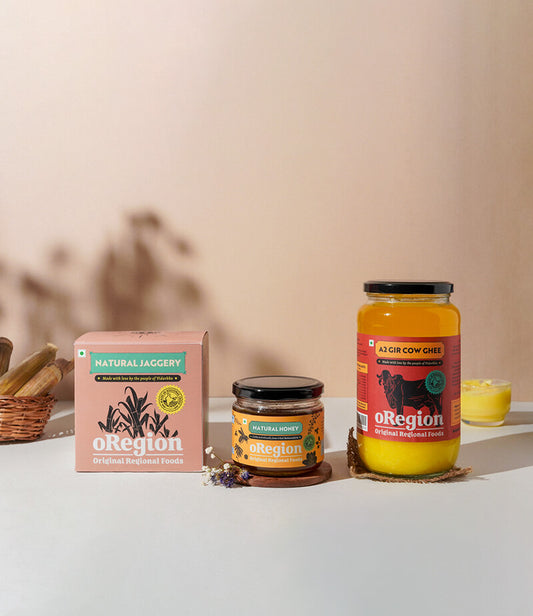
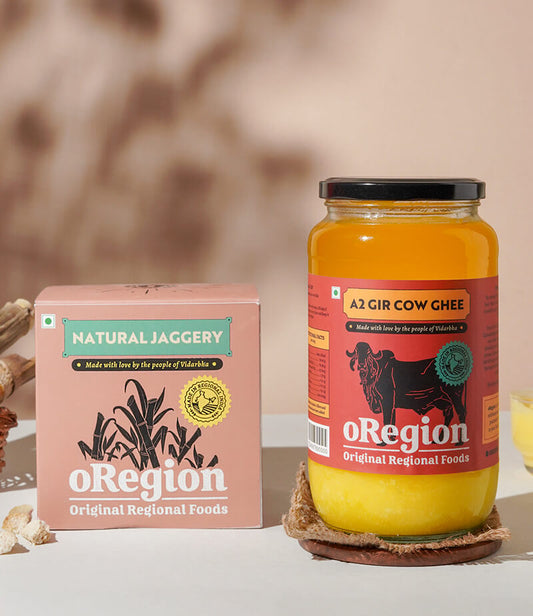
What Makes oRegion Gir Cow Ghee Unique
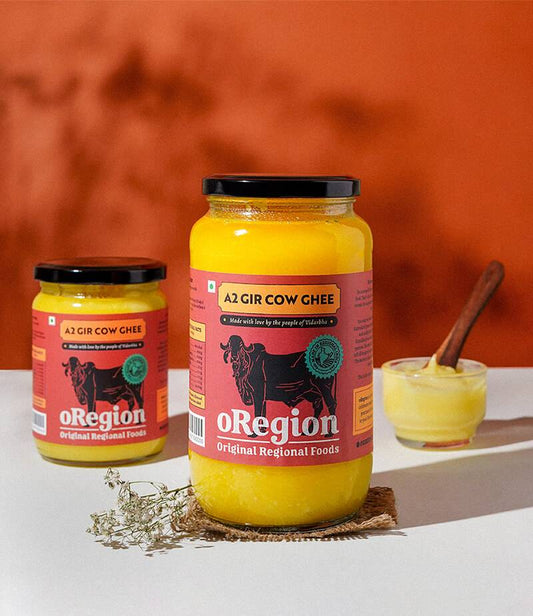
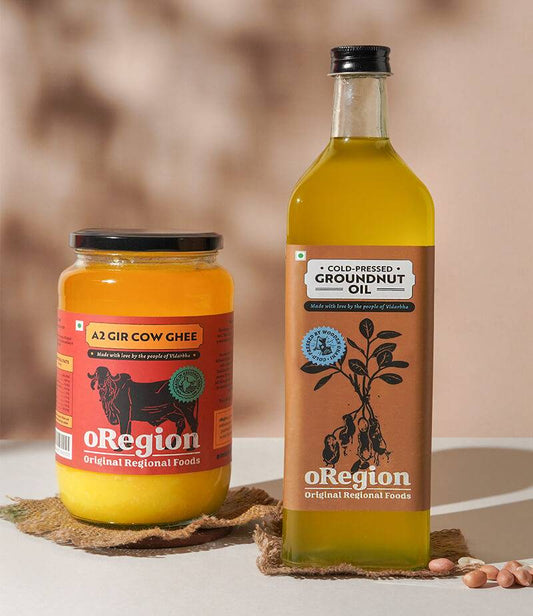
oRegion Gir Cow Ghee is crafted with a strict focus on authenticity and nutrition:
-
Milk sourced exclusively from indigenous A2 Gir cows
-
Prepared using the traditional bilona method
-
Slow-cooked in small batches to preserve fatty acids, antioxidants, and aroma
This approach ensures consistency, purity, and functional nutrition batch after batch.
oRegion Betel Leaf Ghee – A Functional Innovation
oRegion Betel Leaf Ghee represents a thoughtful fusion of tradition and innovation. Betel leaf has long been valued in Ayurveda for its:
-
Digestive support
-
Antioxidant properties
-
Gut-cleansing effects
Infusing it with ghee enhances bioavailability, creating a functional fat that supports digestion and metabolic balance without compromising purity.
oRegion’s Commitment to Purity and Science
oRegion maintains rigorous quality standards:
-
Lab-tested batches for purity and safety
-
Zero additives or preservatives
-
Clear, transparent quality benchmarks
This commitment ensures that every jar delivers consistent nutritional reliability not just taste.
Where to Buy the Best Ghee Online in India
Benefits of Buying Ghee Online from Trusted Brands
Buying ghee online from established, transparent brands offers:
-
Fresh, recently prepared batches
-
Complete traceability of sourcing
-
Access to authentic product information
-
Consistent quality control
Online platforms also allow informed comparison beyond price alone.
How to Store Ghee for Long-Term Stability
Proper storage preserves ghee’s stability and nutritional value:
-
Store in airtight containers
-
Keep away from moisture and direct sunlight
-
No refrigeration required, as ghee is naturally shelf-stable
Correct storage prevents contamination and oxidation.
Final Thoughts – Is Traditional Ghee Truly Backed by Science?
The Balance Between Ancient Wisdom and Modern Research
Modern nutritional science increasingly confirms that traditional diets practiced with A2 Gir cow ghee is one of the most thermally stable, digestible, and nutritionally supportive fats when consumed responsibly.
Its benefits extend beyond cooking performance into:
-
Gut health
-
Hormonal balance
-
Nutrient absorption
-
Metabolic stability
Why Moderation, Purity, and Source Matter Most
The health impact of ghee depends entirely on:
-
Quality of milk
-
Traditional bilona preparation
-
Responsible for daily intake
Without these factors, ghee becomes just another calorie source.
Making an Informed Choice When You Buy Ghee
Choosing pure A2 bilona ghee from a trusted brand like oRegion Ghee ensures that you gain:
-
Genuine nutritional value
-
Digestive comfort
-
Scientifically supported safety
This informed choice transforms ghee from a misunderstood fat into a functional, evidence-supported dietary ally rooted in tradition and validated by modern science.
Follow us for more wellness tips
👉 Buy Now on oregion.in
📸 Instagram: @oRegion.in
📘 Facebook: facebook.com/oRegionfoods
▶ YouTube: https://www.youtube.com/@oRegion_foods