


6 Things to Check While Purchasing Cooking Oil During Festivals
By oregion foodsFestivals are when Indian kitchens become busier than usual. From crispy pakoras, puris, and kachoris to laddoos, namkeen, halwa, and traditional sweets, we often prepare larger quantities of food for family, friends, and guests.
But increased demand also means we should become more careful while purchasing everyday ingredients. Cooking oil is one product that deserves particular attention because the appearance of an oil alone cannot tell us everything about its quality or purity.
So, how can customers become more aware before purchasing cooking oil during the festive season?
The answer starts with a simple habit: look beyond the front label and check the product carefully before putting it in your shopping basket.
The Festival Is Coming—and So Are the Malpractices
Festive seasons often bring higher demand for edible oils. When purchasing increases rapidly, consumers may encounter products with unclear labelling, poor storage conditions, damaged packaging, or misleading marketing claims.
This does not mean every discounted or unfamiliar oil is adulterated [1]. Instead, it means we should become more informed shoppers.
A good cooking oil buying checklist should help us evaluate what we can actually observe and verify.
Here are six practical checks to make before purchasing any cooking oil.
1. Check the Colour and Texture
Colour is often the first thing we notice when buying Cold Pressed Oil.
Depending on the seed, processing method, filtration, and natural pigments, edible oils can range from pale yellow to golden or deeper shades. Cold-pressed Groundnut Oil, mustard oil, or sesame oil does not necessarily look identical from one brand or batch to another.
The same applies to texture. Natural variation does not automatically mean that an oil is adulterated.
Therefore, do not use colour alone as a purity test.
For example, searches such as “Groundnut Oil Colour Change Observed in the Solution” may lead consumers toward home-based visual tests. Such observations can raise a question, but they cannot conclusively establish whether an edible oil is pure or adulterated.
Instead, use colour and texture as an initial observation and then verify the label, manufacturer, batch information, and other product details.
What should you notice?
-
Unusual changes compared with the product's normal appearance
-
Visible foreign particles or contamination
-
Unexpected separation or sediment
-
Product consistency with the manufacturer's description
If something looks clearly abnormal, it is better to choose another sealed pack or contact the manufacturer rather than making a purity conclusion based only on appearance.
2. Check the Viscosity
Viscosity refers to how easily a liquid flows.
Different cooking oils naturally have different viscosities because their fatty-acid [2] composition, temperature, and processing characteristics can vary. Temperature is particularly important because oils generally become thicker when cool and more fluid when warm.
This means viscosity alone cannot prove whether an oil is pure.
For consumers, the useful approach is to notice whether the oil behaves unusually for that particular product. If the oil appears excessively thick, sticky, or otherwise different from what you normally expect, check the storage conditions and product information.
Do not rely on internet claims suggesting that one specific flow test can identify every type of adulteration.
A genuine Pure Cold Pressed Oil should be evaluated using multiple indicators, including its ingredients, manufacturing information, traceability, and applicable quality controls.
3. Check the Opacity and Packaging
The appearance of an oil through its container can provide useful information, but transparency or opacity should not be confused with proof of purity.
Some oils naturally appear clearer, while others may have a deeper or less transparent appearance depending on their processing and filtration.
Packaging matters for another important reason: light, heat, and oxygen can contribute to oil oxidation and quality deterioration over time.
When purchasing Cold Pressed Oils, inspect the bottle or pouch carefully.
Check:
-
Is the container properly sealed?
-
Is there any leakage?
-
Is the bottle cracked or damaged?
-
Is the pack badly dented?
-
Does the packaging appear swollen or compromised?
-
Has the product been displayed in excessive heat or direct sunlight?
Dark or opaque packaging can help reduce light exposure, but a dark bottle does not automatically mean the oil is pure.
Think of packaging as a protection and quality-preservation factor, not a laboratory purity certificate.
4. Check the Manufacturing Date and Expiry or Best-Before Information
Festivals often encourage bulk buying because of discounts and increased household consumption. But buying more oil than we can store or use properly may not always be practical.
Before purchasing, check the manufacturing or packing date and the best-before/expiry information printed on the package, as applicable.
This is especially useful for specialty oils that may not be consumed quickly.
Storage also matters. Once purchased, follow the manufacturer's storage instructions and keep the oil away from excessive heat and direct sunlight.
A simple rule:
Buy according to your actual consumption and storage capacity—not simply because a larger pack appears cheaper.
Freshness, proper storage, and date information are important parts of responsible edible-oil purchasing.
5. Check the Manufacturer Information
A trustworthy purchase should not leave you wondering who made or packed the product.
Look for clear manufacturer or packer information on the label. Depending on the product and applicable requirements, you may also find regulatory information, customer-care details, batch or lot numbers, and other traceability information.
This becomes especially important if you have a question about the product later.
When comparing different Cold Pressed Oils, avoid choosing a bottle solely because its front label says “natural,” “traditional,” “premium,” “organic,” or “healthy.”
Marketing language can attract attention, but traceable product information gives consumers something more useful to evaluate.
6. Check the Ingredients
The ingredient declaration is one of the most important parts of the label.
Before Buying Cooking Oil, look for the ingredient information and understand what the product actually contains.
If you are specifically looking for 100% pure cooking oil, do not depend on colour, smell or a viral home test alone. Check the ingredient declaration, manufacturer details, batch information, applicable certifications and available product specifications.
This is also useful when choosing between different types of oil.
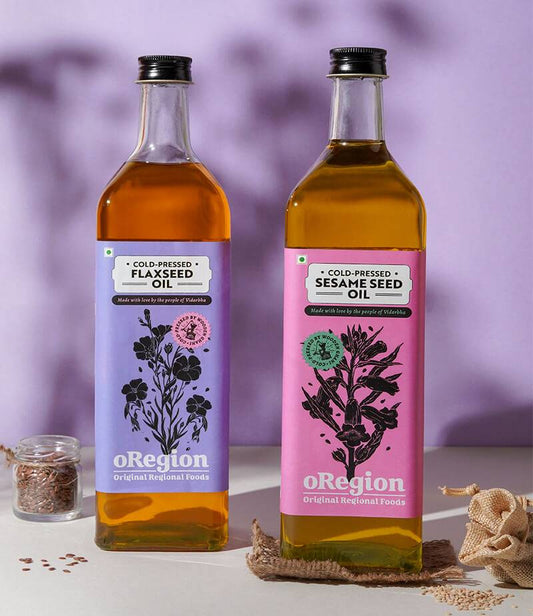
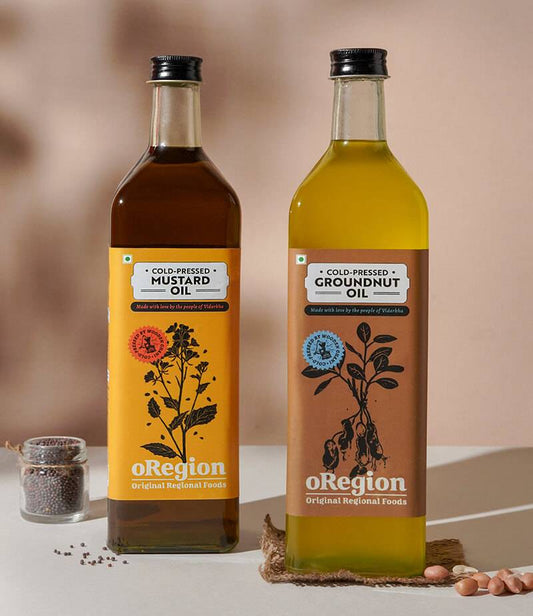
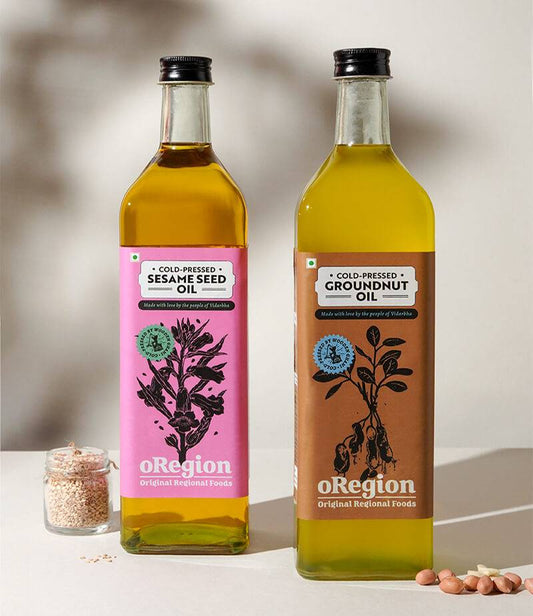
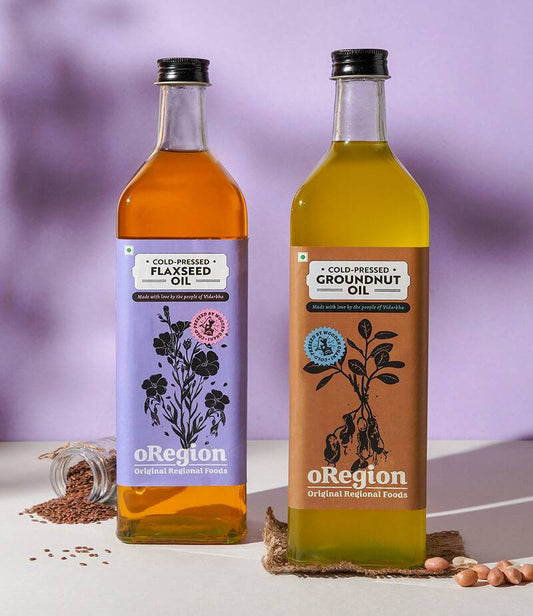
At oRegion, our Cold Pressed Oil range includes:


Each oil has its own characteristics and culinary applications. For instance, Cold Pressed Flaxseed Oil is commonly more suitable for cold preparations such as drizzling and salad dressing, while groundnut, mustard, sesame, coconut, and sunflower oils may be selected according to the recipe, flavour preference, and intended cooking application.
How Can Customers Become More Aware Before Purchasing Cooking Oil?
Awareness does not mean trying to become a food laboratory at home.
Instead, consumers can develop a simple edible oil buying checklist:
Look → Read → Verify → Compare → Purchase.
First, look at the oil and packaging. Then read the complete label rather than only the front-facing claims. Verify the manufacturer, ingredients, batch, and date information. Compare products according to their intended use. Finally, purchase an amount that can be stored properly and consumed within the recommended period.
This approach is more reliable than believing that a particular colour, smell, viscosity, or bottle design can independently prove purity.
5 Things to Check Before Buying Cooking Oil: Quick Festival Checklist
Before purchasing cooking oil for Diwali or another festival, remember these five broad checks:
-
Cooking suitability — Is the oil appropriate for the recipe and required cooking method?
-
Fat composition — Have you checked the nutrition information rather than relying only on health claims?
-
Packaging — Is the container intact, sealed, and properly stored?
-
Quality information — Are manufacturer, batch, and applicable regulatory details clearly available?
-
Freshness — Have you checked the manufacturing/packing and best-before or expiry information?
And if you want a more detailed product inspection, add the three visual and label checks: colour & texture, viscosity/appearance, and ingredients.
What About Reusing Cooking Oil During Festivals?
Buying the right oil is only one part of responsible festive cooking.
Repeatedly heating oil can cause chemical and physical changes. Food particles, moisture, oxygen, and high temperatures can contribute to oil degradation.
Therefore, we should not assume that used cooking oil can be reheated indefinitely simply because it still appears usable.
FSSAI uses Total Polar Compounds (TPC) [3] as an important indicator of degradation in used cooking oil and states that vegetable oil with TPC [4] above 25% should not be used for food.
At home, most consumers will not have a TPC testing device. That is why obvious signs such as persistent unpleasant odour, excessive foaming, unusual smoking, significant darkening or heavy burnt residue should encourage us to stop using the oil rather than repeatedly reheating it.
Final Takeaway: Be an Informed Oil Buyer This Festival
Festivals should be about food, family and celebration—not confusion over which cooking oil to purchase.
The simplest way to become a smarter consumer is to slow down before buying and check the product properly.
Look at the colour and texture, but do not treat appearance as proof of purity. Consider viscosity and opacity as observations, not laboratory tests. Inspect the packaging, check the manufacturing and best-before information, verify the manufacturer, and read the ingredients carefully.
Most importantly, do not let words such as “natural,” “premium,” “traditional,” “organic,” or “cold pressed” make the entire purchasing decision for you.
At oRegion, we believe awareness is an important part of choosing food responsibly. Our range of Cold Pressed Oils—including Flaxseed, Mustard, Sesame, Groundnut, Coconut, and Cold Pressed Sunflower Oil—is designed for consumers looking for traditionally extracted oils for different household cooking needs.
Choose according to your recipe. Read before you buy. Check before you trust. And make your festive food choices with awareness.
Follow us for more wellness tips
👉 Buy Now on oregion.in
📸 Instagram: @oRegion.in
📘 Facebook: facebook.com/oRegionfoods
▶ YouTube: https://www.youtube.com/@oRegion_foods
👉 Shop Globally on Distacart & PushMyCart