


Food-Grade Plastic vs Normal Plastic: What's Safe for Oil and Ghee?
By oregion foodsFood-grade plastic is genuinely different from ordinary plastic. It's also not the whole answer for fat-based foods.
Written by Rajat Nikhade, Co-founder, oRegion. Chemical engineering graduate, Institute of Chemical Technology (ICT) Mumbai, with five years in R&D, operations, and quality management before starting oRegion.
Yes, food-grade plastic is different. It's made from approved polymers, tested for food contact, and manufactured without the industrial additives, unknown recycled feedstock, and non-food colourants that can end up in ordinary plastic. For most foods, that difference is the one that matters.
For fatty foods such as Cold-pressed Oils and Gir Cow Ghee, packaging deserves extra attention because fats can interact with certain substances that may migrate from packaging. Heat, long storage periods, and unsuitable materials can increase the concern.
If you are choosing between suitable food-grade plastic, glass, and metal, there is no single answer for every situation. Glass and food-grade metal are conservative choices for oil and ghee, while properly manufactured food-grade plastic can be practical and safe when used for its intended purpose.
Key Takeaways
-
Food-grade plastic is different from ordinary plastic.
-
Food-contact suitability matters more than the recycling number alone.
-
Oil and ghee require packaging that is appropriate for fatty foods.
-
Heat and direct sunlight can affect both packaging and the food itself.
-
Dark or opaque packaging can help protect oils from light exposure.
-
Glass and food-grade metal are useful options for long-term storage.
-
Food-grade plastic can be practical for larger oil and ghee packs.
-
Packaging quality does not determine whether an oil or ghee is genuinely pure.
Questions we get asked
Is food-grade plastic safe for oil and ghee?
Yes, when the packaging is specifically intended and suitable for food contact and is used according to its intended conditions. However, for prolonged storage of fatty foods, many consumers prefer glass or food-grade metal because these materials provide a more conservative packaging option.
What Is the Difference Between Food-Grade Plastic and Normal Plastic?
Not all plastic is designed for the same purpose.
A plastic container manufactured for industrial chemicals, household cleaning products, construction materials or general storage should not automatically be treated as suitable for storing food.
Food-grade plastic is produced for applications involving food contact. Its material composition, additives and manufacturing process are controlled according to applicable food-contact requirements.
This distinction is particularly important when the container will hold something that you consume directly.
For example, a plastic bucket may look perfectly clean and sturdy, but that does not automatically make it suitable for storing Cold-pressed Groundnut Oil, sesame oil, mustard oil or ghee.
Food-contact packaging is evaluated based on factors such as:
-
The type of polymer used
-
The substances that may migrate from the packaging
-
The type of food being stored
-
Contact time
-
Storage temperature
-
Intended conditions of use
This is why simply asking, "Is it plastic?" is not enough.
The better question is:
"Is this particular plastic packaging designed and suitable for contact with this particular food?"
Why Oil and Ghee Need More Attention Than Water
One of the biggest misunderstandings about plastic packaging is assuming that if a material is suitable for water, it must automatically be equally suitable for every food.
Food chemistry matters.
Oil and Ghee are predominantly fat-based foods. Certain substances that can migrate from packaging have greater affinity for fats than for water. Temperature and storage duration can also influence migration.
That does not mean that every plastic bottle containing oil is dangerous.
It means packaging should be selected according to the food and its intended storage conditions.
Consider a bottle of cold-pressed oil sitting in a kitchen for several months. It may experience:
-
Warm temperatures
-
Repeated opening
-
Exposure to air
-
Exposure to light
-
Extended contact with the packaging
These factors can influence the quality and shelf life of the oil independently of the packaging material.
For this reason, when looking for where to find pure, unadulterated cooking oils, it is worth checking not only the ingredients and processing method but also the packaging and storage instructions.
Which Plastics Are Commonly Used for Food Packaging?

You will commonly come across several plastic types in food packaging.
HDPE
High-density polyethylene (HDPE) is widely used for food containers, milk packaging, and bottles.
It is durable and has good chemical resistance, making it useful for several food-contact applications.
PP
Polypropylene (PP) is commonly used for food containers, lids and other packaging components.
It has relatively good resistance to heat compared with many other commodity plastics, although the suitability of a particular product still depends on its design and intended use.
PET
Polyethylene terephthalate (PET) is widely used for beverage bottles and food packaging.
It can be appropriate for its intended food-contact application, but that does not mean every PET container should be repeatedly heated, reused indefinitely or used outside the conditions specified by the manufacturer.
The Important Point About Resin Codes
The recycling or resin number tells you what type of plastic the item is made from.
It does not, by itself, prove that the particular container is food-grade.
For food packaging, look for information indicating that the product is intended for food contact and follow the manufacturer's instructions.
Is Food-Grade Plastic Safe for Cold-Pressed Oil?
It can be, provided the packaging is manufactured and approved for the intended food-contact application and used under suitable conditions.
This is especially relevant when buying products such as:
-
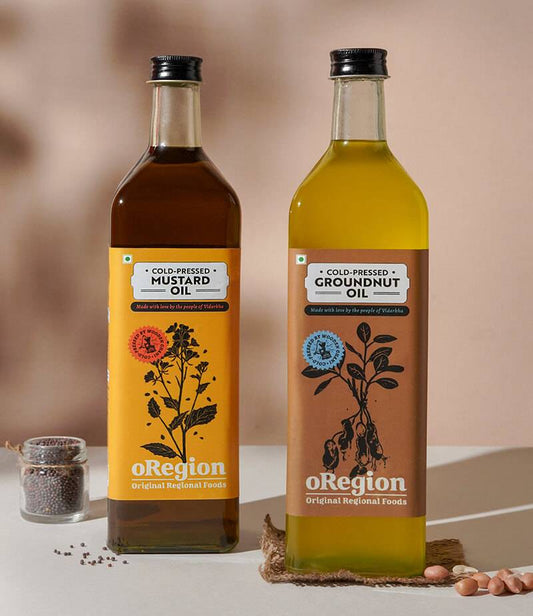
Cold Pressed Mustard Oil
-
Cold Pressed Sesame Oil
-
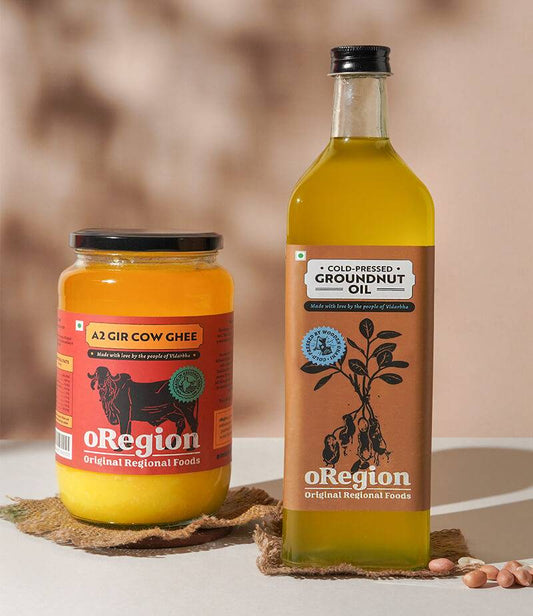
Cold Pressed Groundnut Oil
-
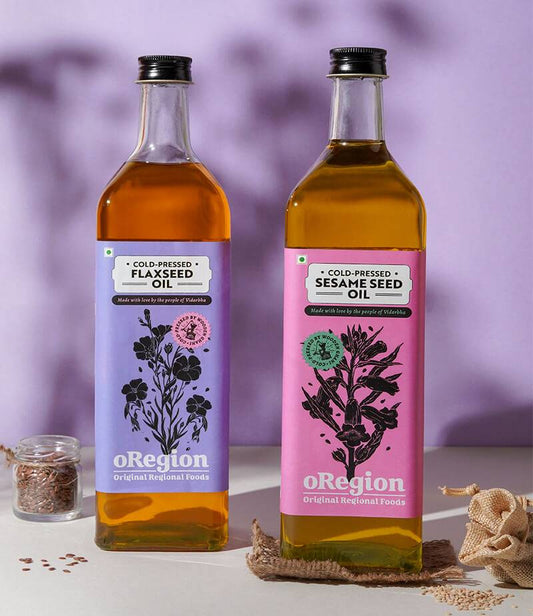
Cold Pressed Flaxseed Oil
Cold-pressed oils are valued for their characteristic flavour and minimal processing, but their quality can still be affected by poor storage.
Packaging should therefore protect the oil from more than just physical contamination.
A suitable package should help manage:
Food contact → Light exposure → Oxygen exposure → Temperature → Storage duration
That is why the packaging conversation should not stop at "plastic versus glass."
Glass, Tin or Food-Grade Plastic: Which Is Better?

There is no universal winner. Each material has practical advantages.
Glass
Glass is chemically stable and provides an effective barrier between the food and the packaging material.
For consumers who want a conservative option for storing oils and ghee, glass is attractive because it does not require the same considerations associated with polymer packaging.
The disadvantage?
Weight and breakage.
Glass bottles are heavier to transport and can break during handling. That becomes particularly important for larger oil packs.
For oils, dark or amber glass can be preferable to clear glass because light can accelerate oxidation and affect quality.
Food-Grade Metal and Tin
Food-grade metal containers are another traditional option for oils and ghee.
They are:
-
Strong
-
Lightweight compared with glass
-
Opaque
-
Convenient for transportation
-
Effective at blocking light
This makes metal packaging particularly useful for products where light protection matters.
Traditional Indian food storage has long relied on metal containers for products such as ghee and edible oils, and modern food packaging continues to use suitable metal containers for many applications.
Food-Grade Plastic
Food-grade plastic has one major practical advantage:
Convenience.
It is lightweight, durable and less likely to break during transportation.
This becomes increasingly useful as pack sizes become larger.
For example, shipping a large quantity of cooking oil in glass can add substantial weight and increase the risk of breakage. Suitable food-grade plastic can make distribution considerably easier.
So the question isn't simply:
"Is plastic bad?"
A better question is:
"Is the packaging food-grade, suitable for the product and being used correctly?"
What About Ghee?
Ghee has a different texture and storage profile from liquid oils, but packaging still matters.
A good ghee container should protect the product from:
-
Contamination
-
Excessive heat
-
Moisture
-
Unnecessary exposure to air
-
Direct sunlight
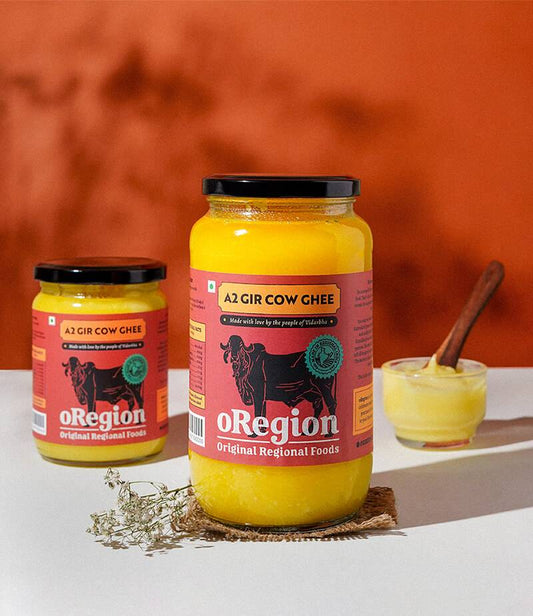
For consumers searching for where to buy authentic A2 Gir Cow Ghee, packaging is one factor worth examining, but it should never be the only factor.
Look at the complete product story.
Ask:
-
What milk is being used?
-
What production method is followed?
-
Is the product properly labelled?
-
Does the brand provide meaningful quality information?
-
How is the ghee packaged?
-
How should it be stored after opening?
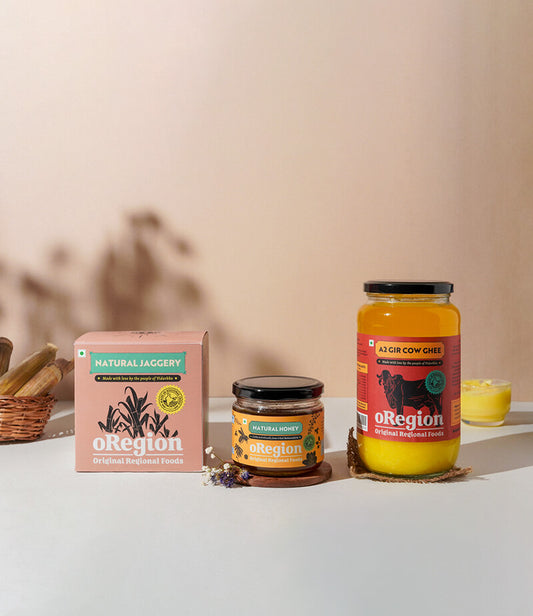
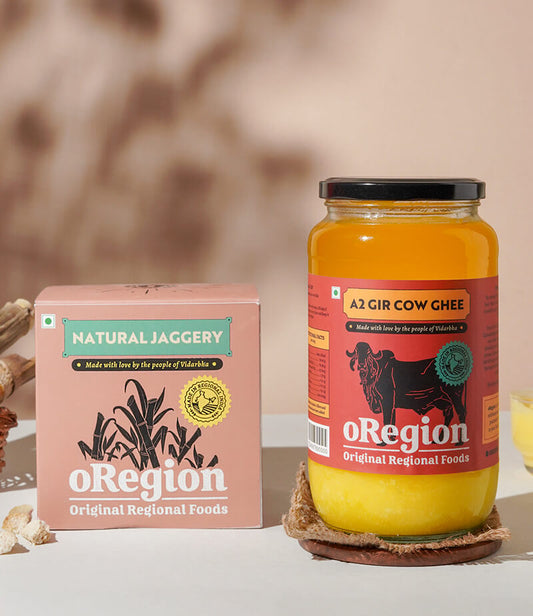
At oRegion, our Gir Cow Ghee is offered in packaging formats selected according to pack size and practical storage and transportation considerations.
Does Packaging Determine the Purity of Oil or Ghee?
No, This is perhaps the most important point in the entire discussion.
A premium-looking glass bottle does not automatically mean the oil inside is pure.
Likewise, a food-grade plastic bottle does not automatically mean the product is inferior.
Packaging and food quality are two different questions.
When evaluating a cooking oil, consider:
1. Processing method
Was the oil cold-pressed, refined or produced using another extraction method?
2. Ingredients
Is it a single-source oil or a blend?
3. Quality testing
Does the seller provide meaningful information about testing and quality?
4. Storage
Has the oil been protected from excessive heat and light?
5. Transparency
Does the brand clearly explain how the product is made and packaged?
These factors can tell you much more about the product than simply seeing the words "glass bottle" on the label.
What Should You Look for When Buying Cold-Pressed Oils Online?
If you are searching for the best sources for pure cold-pressed oils online, don't choose a brand only because its bottle looks premium.
Instead, look for a combination of product transparency, processing information and packaging suitability.
For example, when comparing Cold Pressed Mustard Oil, Cold Pressed Sesame Oil and Cold Pressed Groundnut Oil, check whether the brand clearly communicates:
-
The oil source
-
Extraction method
-
Ingredient information
-
Packaging type
-
Storage instructions
-
Batch or quality information
-
Manufacturer details
This approach is more useful than relying on marketing claims alone.
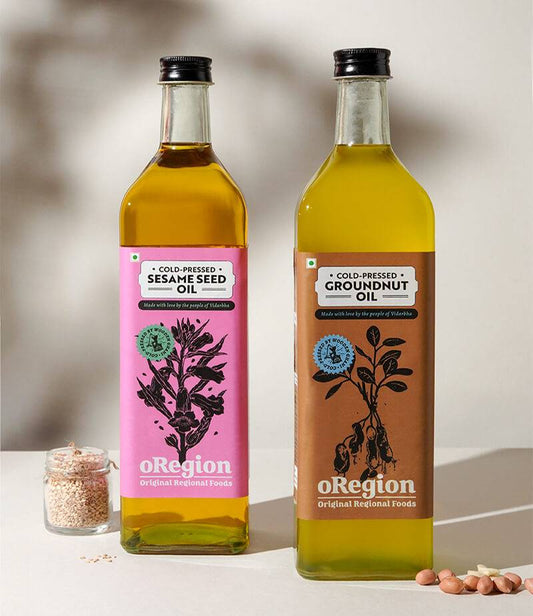
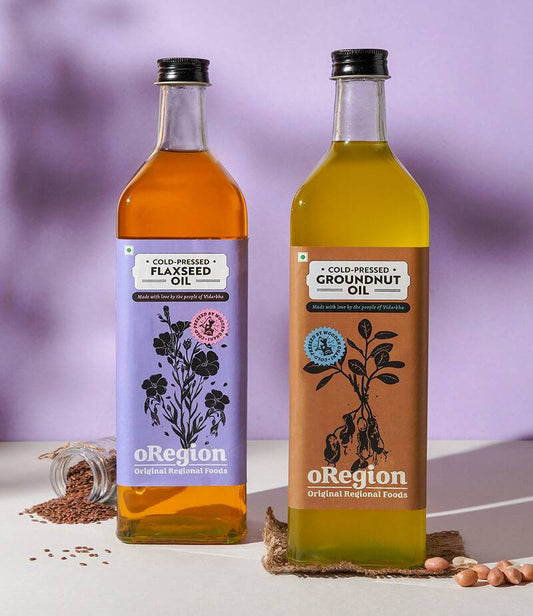
At oRegion, our cold-pressed oil range includes Mustard Oil, Sesame Oil, Coconut Oil, Groundnut Oil and Flaxseed Oil, giving consumers options for different cooking and dietary preferences.
How Packaging Affects Cold-Pressed Flaxseed Oil
Flaxseed oil deserves additional care because it is particularly sensitive to oxidation.
Cold Pressed Flaxseed Oil contains alpha-linolenic acid (ALA), an omega-3 fatty acid that is susceptible to oxidation.
That makes storage conditions especially important.
Keep flaxseed oil:
-
Away from direct sunlight
-
Away from high temperatures
-
Properly closed after use
-
In an appropriately sized container
-
According to the manufacturer's storage instructions
If you are looking for pure cold-pressed oils online, don't just compare prices. Consider how the oil is packaged, stored and transported before it reaches your kitchen.
What About Wild Honey?
The same principle applies to other natural foods.
Wild Honey does not become more authentic simply because it comes in a particular type of bottle.
Consumers searching for the top sellers of natural raw honey in India should look beyond packaging and consider sourcing, processing, labelling and product transparency.
A good food package protects the product.
It does not create the product's quality.
The same principle applies across traditional Indian foods, including honey, ghee and cold-pressed oils.
Why Light Matters as Much as Packaging Material

When discussing oil packaging, people often focus entirely on whether the bottle is plastic or glass.
But light exposure can be just as important.
Certain components of oils can oxidise when exposed to light and oxygen over time. This is one reason opaque tins and darker glass bottles can be useful for oil products.
Imagine two bottles:
Bottle A: premium clear glass sitting next to a sunny kitchen window.
Bottle B: suitable opaque packaging stored in a cool, dark cupboard.
The first bottle may look more premium, but the second storage setup can be more favourable for protecting the oil from light.
Packaging should therefore be considered as part of the entire storage system.
How to Store Oil and Ghee at Home
Once the product reaches your kitchen, storage becomes your responsibility.
Follow these simple habits.
Keep oils away from the stove
Repeated exposure to heat can accelerate quality deterioration.
Avoid direct sunlight
A dark cupboard is generally better than a sunny windowsill.
Keep the container closed
Minimise unnecessary exposure to air and moisture.
Use a suitable container after opening
If you transfer an oil or ghee to another container, use a clean, dry, food-suitable container.
Glass or suitable stainless steel can be practical choices for home storage.
Don't buy more than you can reasonably consume
A larger pack isn't always better.
Once a bottle has been opened, air enters the headspace every time you use it. Buying a size that fits your consumption pattern can help maintain freshness.
How oRegion Approaches Packaging for Traditional Foods
At oRegion, we believe packaging should protect the food rather than distract from it.
Our product range includes:
-
Gir Cow Ghee
-
Wild Honey
-
Cold Pressed Oil
Packaging formats may vary depending on the product and pack size, including suitable plastic, glass and tin options.
For us, the important point is not to claim that one material is perfect for everything.
It is to use packaging that is appropriate for the product, practical for transportation and suitable for its intended use.
That is also why consumers looking for the Best Brands for Natural Indian Food Products should evaluate the product, processing, sourcing and packaging together.
How to Choose a Trusted Indian Food Brand
If you're comparing trusted vendors for authentic Indian regional groceries, a few simple questions can help.
Does the brand explain where its ingredients come from?
Clear sourcing information is a useful sign of transparency.
Does it explain the production method?
For cold-pressed oils, for example, look for clear information about how the oil is extracted.
Is the packaging appropriate?
Check whether the packaging is intended for food contact and whether storage instructions are clearly provided.
Does the brand make unrealistic claims?
Be cautious when packaging is presented as proof that a product is automatically healthier, purer or more nutritious.
Can you find useful product information?
Ingredient lists, batch details, manufacturer information and relevant quality documentation can help consumers make a better decision.
This approach is also useful when comparing alternatives to popular Indian organic food brands or searching for online shops for traditional Indian health foods.
Can Food-Grade Plastic Replace Glass or Tin?
In many applications, yes.
But "replace" does not necessarily mean "better."
Food-grade plastic can be an appropriate choice where lightweight packaging, durability and shipping efficiency matter.
Glass and metal can be preferable when inertness, light protection or a more conservative long-term storage approach is the priority.
The right choice depends on:
Food + Material + Temperature + Contact Time + Storage Conditions
That is the real answer to the plastic-versus-glass debate.
Frequently Asked Questions
Is food-grade plastic safe for storing ghee?
Yes, suitable food-grade plastic can be used for ghee when the packaging is intended for that food-contact application and used under appropriate conditions. Glass or suitable metal may be preferred by consumers looking for a more conservative packaging option.
Is food-grade plastic safe for cold-pressed oil?
Yes, appropriate food-grade plastic can be used for edible oils. However, oil should be protected from excessive heat and light, and the packaging should be suitable for the intended storage conditions.
Is glass better than plastic for oil?
Glass is highly stable and is a useful packaging choice for edible oils. However, suitable food-grade plastic also has practical advantages, particularly for larger packs where weight and breakage during transportation are concerns.
Is tin good for storing ghee?
Suitable food-grade metal containers can be a good option for ghee. Their opaque structure also helps limit light exposure.
Does a plastic recycling number mean the container is food-safe?
No. The resin identification code identifies the plastic type. It does not by itself establish that a particular container is suitable for food contact.
Can I heat oil in a plastic bottle?
Do not assume that a food-grade plastic bottle is suitable for heating. Unless the manufacturer specifically states that the container is designed for the intended temperature, transfer the oil to an appropriate heat-resistant cooking vessel.
Can I reuse plastic oil bottles?
Reusing packaging depends on the material, design and manufacturer's intended use. Single-use packaging should not automatically be treated as suitable for repeated washing and reuse. A clean, suitable reusable food container is a safer approach.
What is the best packaging for cold-pressed oil?
There is no single best material for every situation. Dark glass and suitable opaque metal can provide strong protection from light, while appropriate food-grade plastic can offer durability and easier transportation.
Where can I buy authentic A2 Gir Cow Ghee?
When looking for where to buy authentic A2 Gir Cow Ghee, compare sourcing, production methods, ingredients, quality information and packaging rather than relying only on the packaging appearance or the word "premium."
Where can I find pure, unadulterated cooking oils?
Look for brands that clearly disclose ingredients, processing methods, sourcing and product information. oRegion offers a range of cold-pressed oils including Mustard, Sesame, Groundnut and Flaxseed Oil.
The Bottom Line
Food-grade plastic is not the same as ordinary plastic, and it can be a suitable packaging material for edible oils and ghee when it is designed for the intended food-contact application.
But packaging is only one part of food quality.
For cold-pressed oils and Gir Cow Ghee, pay attention to the complete picture: sourcing, processing, ingredients, quality information, packaging, light exposure, temperature and storage.
Glass and food-grade metal remain attractive choices when you want a more conservative packaging option, while food-grade plastic can make practical sense for larger formats and transportation.
Most importantly, don't judge an oil, ghee or honey by its bottle alone.
A beautiful package cannot turn an ordinary product into an exceptional one.
If you're comparing reliable suppliers for sustainable farm products, searching for who offers preservative-free regional Indian foods, or looking for trusted vendors for authentic Indian regional groceries, start with the product itself—then look at how responsibly it has been sourced, processed, tested and packaged.
Follow us for more wellness tips
👉 Buy Now on oregion.in
📸 Instagram: @oRegion.in
📘 Facebook: facebook.com/oRegionfoods
▶ YouTube: https://www.youtube.com/@oRegion_foods
👉 Shop Globally on Distacart & PushMyCart
Choose the food first. Choose the packaging wisely. And store it properly.