


Why Does Oil Look Cloudy at the Bottom? Understanding Natural Sedimentation in Cold Pressed Oil
By oregion foodsWhen you open a bottle of Cold Pressed Oil, you might expect a clean, crystal-clear liquid. But instead, you notice something unusual, a slightly cloudy appearance or even visible sediment, specifically at the bottom. For many first-time buyers, this raises concern: Is the oil खराब? Is it safe? Should I still use it?
Let us reassure you, this is not a defect. In fact, this is one of the strongest indicators that you are using real, unprocessed, and nutrient-rich oil.
At oRegion, we believe in educating consumers so they can make informed, health-focused choices. In this detailed guide, we will break down the science, myths, and real reasons behind oil cloudiness and sedimentation so you can confidently choose the Best Cold Pressed Oil for your home.
Why Does Oil Look Cloudy at the Bottom? A Simple Explanation for Everyday Consumers
The First Thing You Notice – Is It a Problem or a Sign of Purity?
Imagine Buying Cold Pressed Mustard Oil or Cold Pressed Sesame Oil, and noticing a layer forming at the bottom. Your first instinct might be to question its quality. However, this cloudiness is actually a natural signature of authenticity.
Unlike refined oils, which are heavily processed to look visually appealing, Wood Pressed Oil retains natural compounds from seeds and nuts.
Clear vs Cloudy Oil – What Most People Misunderstand
Most people associate clarity with purity. But in reality, clear oil often means over-processing. Refined oils go through bleaching, deodorizing, and chemical filtration, stripping away nutrients.
On the other hand, when you Buy Cold Pressed Oil, especially from trusted brands like oRegion, you are choosing oil in its most natural state.
Quick Answer
“Translucent oil is natural in cold pressed oils and usually means it is unrefined, chemical-free, and rich in nutrients.”
When you buy cold pressed oil, especially wood pressed oil, a slightly translucent appearance or sediment at the bottom is not a defect; it is actually a sign that the oil has not been over-processed. Unlike refined oils, which are stripped of natural compounds to achieve visual clarity, cold pressed oil retains its original nutritional profile. This includes natural fibers, micronutrients, and bioactive compounds that gradually settle over time.
What Causes Sedimentation in Cold Pressed Oil?
Suspended Natural Particles from Seeds and Nuts
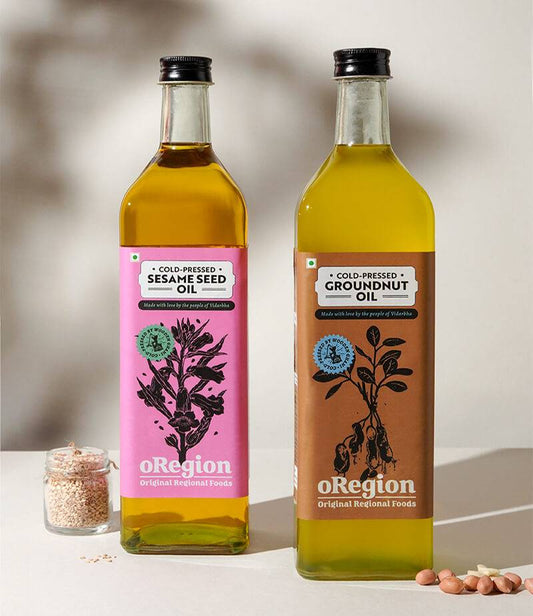
When oils such as Flaxseed Oil, groundnut oil, or sesame oil are extracted through mechanical pressing, tiny fragments of seeds, husk particles, and plant fibers remain suspended in the oil. These particles are extremely fine and are not harmful; in fact, they often carry essential nutrients.
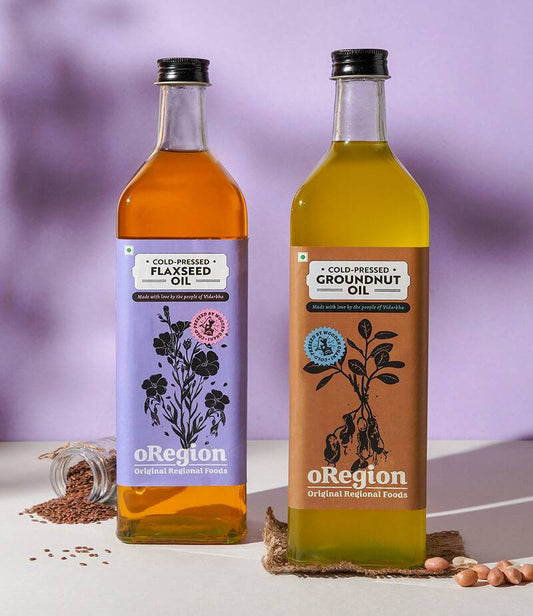
For example, when you buy linseed oil or check the Flaxseed Oil Price, you are often paying for its richness in omega 3 oil content, lignans, and fiber residues, all of which contribute to slight cloudiness.
How Wood Pressing Retains Fiber, Pulp, and Micronutrients
The traditional extraction method used in wood pressed oil (Kacchi Ghani) operates at low speeds and low temperatures. This slow extraction ensures that heat-sensitive nutrients are preserved.
Unlike industrial processing, this method does not destroy natural compounds like:
-
Essential fatty acids
-
Plant sterols
-
Natural antioxidants
As a result, whether it’s cold pressed mustard oil, Cold Pressed Groundnut Oil, or cold pressed sesame oil, the oil retains microscopic particles of pulp and nutrients.
Gravity’s Role – Why Particles Settle at the Bottom Over Time
Over time, these heavier particles naturally settle at the bottom due to gravity. This is a completely natural process known as sedimentation.
If you store your cold pressed oil purchased online for a few days without disturbance, you will notice the oil becoming clearer at the top while sediment accumulates at the bottom.
“Sedimentation happens because natural particles are heavier and settle down naturally without chemical processing.”
Why Sedimentation Happens Only in Wood Pressed Oil
The Difference Between Wood Pressed (Kacchi Ghani) and Refined Oil
Refined oils undergo multiple stages of filtration and chemical treatment. These processes remove not only visible particles but also essential nutrients.
In contrast, wood pressed mustard oil, sarso oil, and til oil retain their natural structure. This is why when you Buy Mustard Oil Online or buy sesame oil, you may observe sedimentation.
No High Heat, No Chemicals – Only Mechanical Extraction
Refined oils are exposed to high temperatures, which break down nutrients. Chemical solvents are also used to extract maximum oil, but they strip away purity.
Cold pressed oils, however, rely purely on mechanical pressure. This ensures:
-
No chemical contamination
-
No nutrient destruction
-
No artificial clarity
Why Natural Residues Remain Intact in Cold Pressed Oils
Because there is no aggressive filtration, natural residues remain in the oil. These residues are beneficial and include proteins, fibers, and trace minerals.
“Wood pressed oil keeps natural compounds intact, which later settle as sediment.”
The Role of Single Cotton Filtration in Maintaining Oil Purity
What Is Single Filtration Using a Cotton Sieve?
At oRegion, we follow a traditional yet highly effective method known as single-cotton filtration. After extracting cold pressed oil through wooden pressing (Kacchi Ghani), the oil is passed through a natural cotton cloth filter just once.
This step is not meant to make the oil look artificially clear; it is simply to remove large, visible impurities such as seed shells, dust particles, or external contaminants that may enter during extraction.
What makes this process unique is that it does not disturb the oil’s natural composition. Fine particles, phospholipids, and micronutrients remain intact. These are the same elements that later contribute to slight cloudiness or sediment at the bottom.
When consumers buy cold pressed oil online, especially oils like cold pressed linseed oil, groundnut oil, or Sesame Oil Online, this minimal filtration ensures they receive oil in its most natural and beneficial form.
Why Minimal Filtration Is Better Than Over-Processing
In modern oil refining, filtration is often taken to extremes. Oils are passed through multiple layers of filters, chemical treatments, and even bleaching agents to achieve a crystal-clear appearance. While this may look appealing on shelves, it comes at a cost, nutritional loss.
Over-filtration removes:
-
Natural antioxidants
-
Essential fatty acids (like Omega 3 oil in flaxseed oil)
-
Plant sterols and vitamins
Minimal filtration, on the other hand, ensures that oils like cold pressed groundnut oil, cold pressed mustard oil, and cold pressed sesame oil retain their original nutritional profile.
This is why when you compare refined oil with wood pressed oil, the latter may look slightly cloudy, but it is significantly richer in health-supporting compounds.
How oRegion Maintains Balance Between Purity and Cleanliness
At oRegion, our approach is simple: clean, but not over-processed. We ensure that every bottle meets safety standards while preserving its natural richness.
Whether you are planning to buy linseed oil, checking the flaxseed oil price, or exploring peanut oil online, our oils are crafted to deliver both purity and nutrition.
We do not chase artificial clarity; we focus on authenticity.
“Single cotton filtration removes large impurities but keeps essential nutrients intact.”
Natural Waxes and Fat Crystallization: Why Oil Looks Thick or Cloudy
What Happens to Oil in Cold Temperatures?
When temperatures drop, especially during winter or refrigeration, natural fats present in oils begin to solidify. This is a completely normal physical reaction.
Oils like til oil, sesame oil, and flaxseed oil are particularly sensitive to temperature changes due to their natural fat composition. As the temperature decreases, these fats lose fluidity and start forming crystals.
Understanding Wax Formation in Oils Like Sesame and Olive
Certain seeds naturally contain plant waxes. During the extraction of Cold Pressed Sesame Oil or wood pressed oil, these waxes remain in the oil because they are not removed through chemical refining.
These waxes are beneficial; they help protect the oil and contribute to its shelf stability. However, when exposed to cold temperatures, they become visible as cloudiness or slight thickening.
Why White Flakes or Foggy Layers Appear
If you notice white flakes or a foggy appearance in your oil, especially in winter, it is simply fat crystallization.
This is not spoilage, contamination, or adulteration; it is a sign that the oil is natural and unprocessed. Once the oil is brought back to room temperature, it returns to its clear liquid state.
“Cold temperatures can solidify natural fats, causing cloudiness that disappears when warmed.”
Nutrient-Rich Compounds Behind Cloudiness
Polyphenols – The Natural Antioxidants
Polyphenols are powerful plant-based antioxidants found in cold pressed oil. They play a crucial role in protecting the body against oxidative stress, inflammation, and cell damage.
These compounds are delicate and are often destroyed during refining, but are preserved in wood pressed oil.
Tocopherols (Vitamin E) and Their Role
Tocopherols, commonly known as vitamin E, are present in oils like groundnut oil and peanut oil. They:
-
Support skin health
-
Improve immunity
-
Protect heart health
Their presence contributes to the slight turbidity seen in natural oils.
Phytosterols and Their Health Benefits
Phytosterols are plant compounds that help regulate cholesterol levels and support cardiovascular health.
They are naturally present in oils like mustard oil, sarso oil, and flaxseed oil, and are retained only when the oil is minimally processed.
“Cloudiness often means your oil is rich in antioxidants and essential nutrients.”
Phospholipids, Gums, and Natural Compounds Explained
What Are Phospholipids and Why They Matter
Phospholipids are essential fats that support cell structure and function. They also help in nutrient absorption and metabolism.
How Natural Gums Form in Cold Pressed Oils
During extraction, natural plant gums form as a byproduct. These are harmless and are part of the oil’s natural composition.
Why These Elements Do Not Fully Dissolve
Due to their density and structure, these compounds do not remain evenly distributed. Over time, they settle at the bottom.
“These natural compounds form visible particles, indicating minimal processing.”
Industrial Filtration vs Natural Filtration Method
How Refined Oils Achieve Crystal Clear Appearance
Refined oils undergo multiple industrial processes such as:
-
Bleaching
-
Deodorizing
-
Chemical refining
These processes are designed to improve shelf appeal, not health value.
Chemical Processing, Bleaching, and Deodorization Explained
Chemical solvents are used to extract maximum oil yield. Later, the oil is bleached to remove color and deodorized to eliminate smell.
While this results in visually clear oil, it also removes natural nutrients and flavor.
What Is Lost During Industrial Filtration?
During refining, oils lose:
-
Omega 3 oil (especially in flaxseed oil)
-
Vitamins like E and K
-
Natural antioxidants
“Clear oil often means heavy processing and loss of nutrients.”
Why Cold Pressed Oil Has an Inherent Self-Clearing Property
The Science Behind Natural Sedimentation
Sedimentation occurs due to differences in density between oil and suspended particles. Over time, heavier particles settle at the bottom.
How Oil Separates Impurities Without External Intervention
Unlike refined oils, cold pressed oil naturally separates impurities without chemical intervention. This is a slow but effective natural process.
Time as a Natural Filtration Process
If left undisturbed, oil becomes clearer at the top while sediment settles below. This is nature’s way of filtering.
“Oil naturally settles and clears itself over time without chemicals.”
Conclusion
In a market where appearance often takes priority over authenticity, it is important to understand what truly defines quality. The cloudiness and sediment you see in cold pressed oil are not flaws, they are evidence of purity, minimal processing, and nutritional richness.
From cold pressed mustard oil and sarso tel to flaxseed oil and Groundnut Oil, each oil carries its natural identity, which includes slight variations in clarity and texture.
At oRegion, we believe that real food should remain close to its natural form. When you choose to buy cold pressed oil, you are choosing health over artificial perfection, tradition over industrial shortcuts, and nutrition over visual appeal.
So the next time you notice sediment at the bottom of your oil bottle, remember, it is not something to worry about. It is something to trust.
“Cloudiness is not a flaw; it’s proof your oil is real.”
Follow us for more wellness tips
👉 Buy Now on oregion.in
📸 Instagram: @oRegion.in
📘 Facebook: facebook.com/oRegionfoods
▶ YouTube: https://www.youtube.com/@oRegion_foods
👉 Shop Globally on Distacart & PushMyCart