


Food Safety in India: How to Identify Adulterated Cooking Oil at Home
By oregion foodsImagine cooking a simple dinner for your family. dal, vegetables, and fresh rotis. You carefully select vegetables, wash the grains, and cook everything with care. But there is one ingredient most people rarely question: the cooking oil used every single day.
For millions of Indian households, Cooking Oil is the base of every meal. Whether it is Sarso Tel (mustard oil) for tadka, Groundnut Oil for cooking and frying snacks, or Sesame Oil (Til Oil) for traditional dishes, oil shapes both the taste and nutrition of food.
But here is the real concern many families are beginning to ask:
Is the cooking oil in our kitchen truly pure?
In recent years, food safety experts and health-conscious consumers across India have raised concerns about adulterated cooking oils in the market. Some oils may contain cheaper substitutes, reused frying oils, or chemical additives that reduce their nutritional value.
Understanding how to identify adulterated cooking oil at home has therefore become an important part of protecting your family’s health.
In this guide, we explore simple home detection methods, government food safety initiatives, and why traditional oils like cold pressed mustard oil, groundnut oil, sesame oil, and flaxseed oil are returning to Indian kitchens. We will also explore why many consumers now prefer trusted brands like oRegion, known for producing pure organic oil for cooking using traditional cold pressed methods.
What is the safest cooking oil in India today?
Safest cooking oils are traditionally extracted, cold pressed oils that are free from chemical solvents like hexane. For Indian kitchens, Cold Pressed Mustard Oil (North/East), Cold Pressed Groundnut Oil (West), and Cold Pressed Sesame Oil (South) are ideal because they retain natural antioxidants and have a fatty acid profile suitable for Indian cooking temperatures.
How to detect adulterated cooking oil at home?
-
Refrigerator Test: Place oil in a glass in the fridge for 2–3 hours. Pure oils (like coconut or mustard) show uniform thickening; adulterated oils often separate into cloudy layers.
-
Butter/Ghee Test: Mix oil with a little solid yellow butter. If it turns red immediately, it may contain toxic TOCP (Tri-Ortho-Cresyl-Phosphate).
-
The Aroma Test: Pure Til Oil (Sesame Oil) or Sarso Tel has a sharp, natural pungent smell. A chemical or flat smell indicates refining or dilution.
Is Cold Pressed Oil better than Refined Oil?
Yes. While refined oils use high heat and chemicals (bleaching/deodorizing) that strip nutrients, cold pressed oil means oil extracted below 50°C. This preserves Vitamin E, Omega-3 (especially in Alsi Tel), and natural flavors without adding trans-fats.
Why Cooking Oil Safety Matters More Than Ever: A Complete Guide to Purity
India’s culinary heartbeat is its oil. From the pungent tadka of Kacchi Ghani Sarso Tel in the North to the nutty aroma of Gingelly Oil in the South, oil defines our health. However, as of 2026, food safety reports suggest that nearly 25-30% of loose edible oils in the market may face some form of adulteration.
At oRegion, we believe that "we are what we eat," and the foundation of every meal, the Best Cooking Oil, should be beyond suspicion.
The Growing Crisis: What is Adulterated Cooking Oil?
Adulteration isn't just about mixing; it’s a systemic risk. Today, premium oils are often diluted with:
-
Cheap Palm Olein: Used to increase volume in Groundnut Oil Pure variants.
-
Argemone Oil: A toxic weed seed oil that can cause epidemic dropsy (severe heart and liver issues).
-
Mineral Oils & Recycled Grease: Often filtered and sold as "refined" vegetable oil.
-
Artificial Colors: Used to make pale, low-quality oils look like golden Mustard Oil Organic.
Why the Shift to Cold Pressed Oils?
The question "Is my oil pure?" has led millions of families to choose Cold Pressed Oil. But what is cold pressed oil exactly?
It is a traditional extraction method where seeds are crushed at room temperature. Unlike refined oils that reach 200°C+, cold pressing ensures that the oil’s molecular structure remains "alive." This is why Cold Pressed Oil benefits include better heart health, glowing skin, and higher immunity.
The Science of Smoke Points: Why Temperature Matters for Oil Safety
Understanding the smoke point is the secret to healthy cooking. The smoke point is the temperature at which an oil stops simmering and starts smoking, signaling that the fats are breaking down and releasing harmful free radicals and acrolein (a chemical that gives burnt food a bitter flavor).
-
High-Heat Cooking (Frying & Sauteing): For deep frying, Cold Pressed Groundnut Oil is the gold standard in Indian kitchens. With a smoke point of approximately 227°C (440°F), it remains stable and doesn't lose its nutritional integrity. Similarly, Kacchi Ghani Sarso Tel (Mustard Oil) is excellent for high-heat Indian tadkas.
-
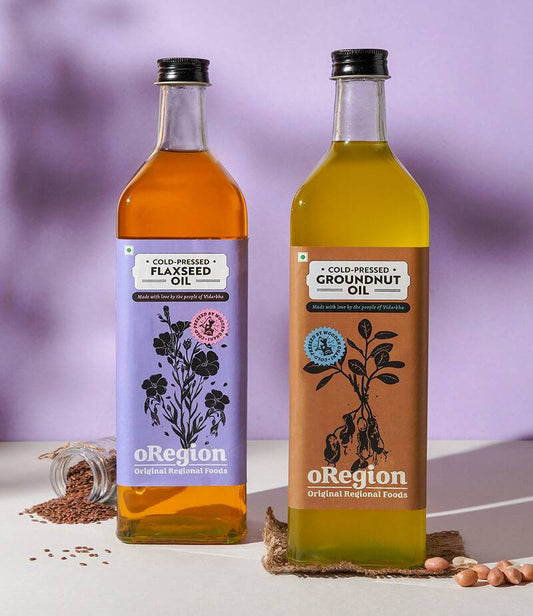
Low-Heat & Finishing Oils: Cold Pressed Flaxseed Oil and Virgin Sesame Oil have lower smoke points. While Sesame Oil is stable enough for quick stir-frying (common in Asian and South Indian cuisine), Alsi Tel should rarely be heated. Its delicate Flaxseed Omega 3 fatty acids break down quickly, so we recommend using it as a "finishing oil" drizzled over warm dal or salads.
-
The Danger of "Reheating": One of the biggest causes of Adulterated Cooking Oil in the food industry is the reuse of frying oil. Repeated heating creates Trans-fats. By switching to a high-quality Wood Pressed Groundnut Oil, you get an oil that doesn't "break" as easily, ensuring your family stays safe from inflammatory compounds.
Sustainable Sourcing & Proper Storage: Preserving the "Liquid Gold"
When you Buy Oil that is cold pressed, you are buying a "living" product. Unlike refined oils that have a 2-year shelf life due to heavy preservatives, Organic Cold Pressed Groundnut Oil and Mustard Oil Cold Pressed are natural and need a little extra care.
Eco-Friendly Sourcing: At oRegion, we prioritize the "Soil to Spoon" journey. By supporting local farmers who grow Flax Crop and Mustard Seeds sustainably, we ensure the oil is free from pesticide residue, a hidden form of adulteration. This makes our Mustard Oil Organic not just a cooking medium, but a contribution to a greener planet.
The Golden Rules of Storage:
-
Keep it in dark: Sunlight can cause Alsi Ka Tel and Til Oil to turn rancid (oxidize). Always store your oils in tinted glass bottles or stainless steel containers.
-
Keep it Cool: Avoid storing your oil bottles right next to the gas stove. Heat from the stove can degrade the Cold Pressed Flaxseed Oil Benefits over time.
-
Seal it Tight: Oxygen is the enemy of antioxidants. Ensure the cap is tight to prevent the oil from developing that "strange smell" often associated with poor storage.
The oRegion Difference: We package our oRegion Groundnut Oil and Sesame Oil in high-quality containers that protect the delicate Vitamin E and phenolic compounds from light and air, ensuring the Cold Pressed Oil Price you pay translates into maximum health value.
Deep Dive: Traditional Oils vs. Modern Superfoods
1. Mustard Oil: The Kachi Ghani Legacy
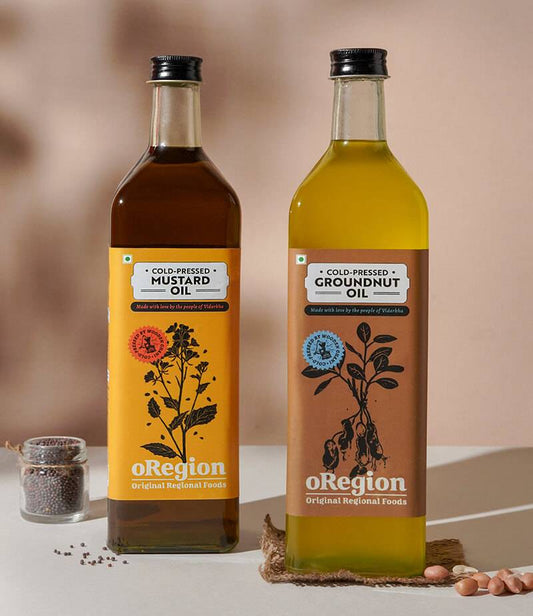
Cold Pressed Mustard Oil (Sarso Tel) is rich in Allyl Isothiocyanate, which acts as a natural preservative and digestive stimulant.
-
Health Fact: Pure Kacchi Ghani Sarso Tel contains an ideal Omega-3 to Omega-6 ratio.
-
oRegion Tip: Our Mustard Seed Oil Cold Pressed is extracted from the finest seeds to ensure that "jhaal" (pungency) that marks its purity.
2. Groundnut Oil: The Versatile Kitchen Staple
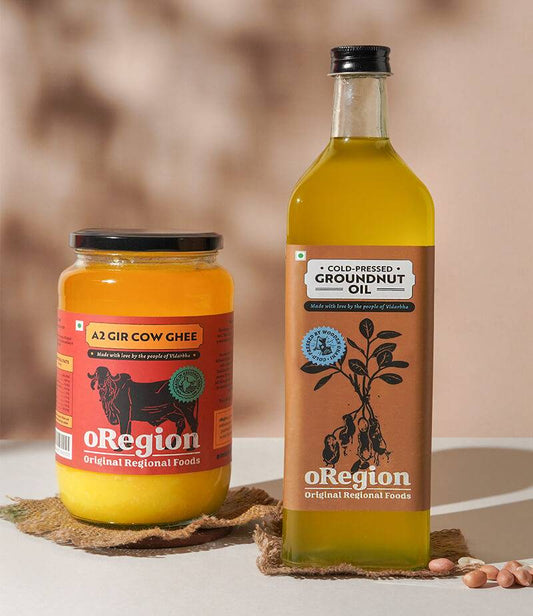
Popular in Gujarat and Maharashtra, Groundnut Oil is prized for its high smoke point.
-
Advantages of Groundnut Oil: It contains Resveratrol (an antioxidant also found in grapes) and high levels of MUFA, which help in managing "bad" cholesterol.
-
Best Wood Pressed Groundnut Oil: When you Buy Oil that is wood-pressed (Chekku Oil), it maintains a mild nutty flavor that doesn't overpower your food.
3. Sesame Oil (Til Ka Tel): The Ayurvedic Elixir
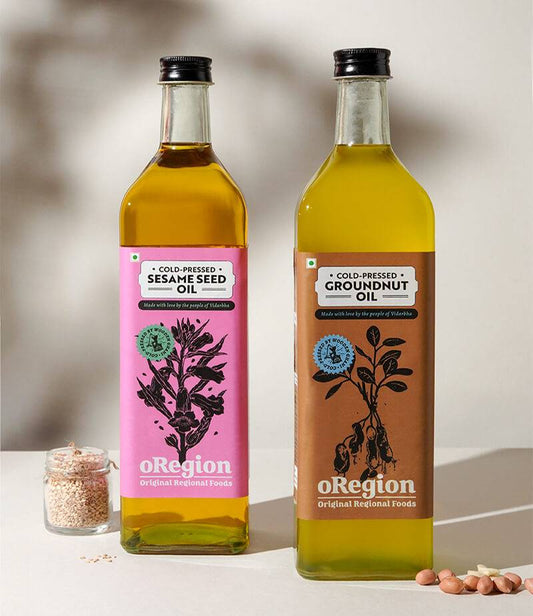
Sesame Oil, also known as Gingelly Oil or Til Oil, is more than just a cooking medium.
-
Sesame Oil for Hair: Rich in Vitamin E and B-complex, it is used extensively for scalp nourishment.
-
Cold Pressed Sesame Seed Oil: Contains Sesamin and Sesamol, unique antioxidants that prevent DNA damage from oxidative stress.
4. Flaxseed Oil (Alsi Ka Tel): The Vegan Omega-3 Powerhouse
Derived from the Flax Crop, Flaxseed Oil is a modern nutritional miracle.
-
Flaxseed and Omega 3: It is the highest plant-based source of Vegan Omega 3.
-
Flaxseed Oil Benefits for Female Health: Nutritionists recommend it for hormonal balance and reducing inflammation.
-
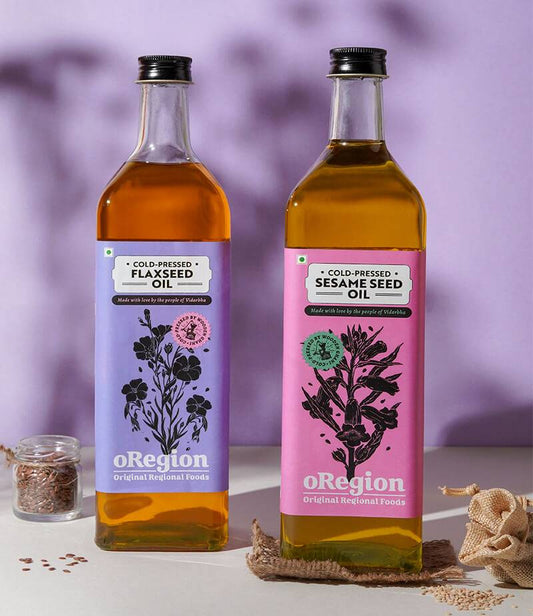
Usage: Use oRegion Flaxseed Oil as a salad dressing or a plant-based Omega-3 supplement rather than for deep frying to preserve its delicate nutrients.
How to Check Oil Purity at Home (DART Tests)
The FSSAI (Food Safety and Standards Authority of India) suggests simple "DART" (Detect Adulteration with Rapid Test) methods:
|
Test Name |
How to Do It |
Pure Result |
Adulterated Sign |
|
Transparency Test |
Pour oil into a glass. |
Clear and uniform. |
Clouds or sediment at the bottom. |
|
Nitric Acid Test |
Add a few drops of Nitric acid to Mustard Oil. |
No color change. |
Red/Brown color (Argemone Oil). |
|
The Rub Test |
Rub oil on your palms. |
Natural scent stays. |
Smells like chemicals or disappears fast. |
Choosing Wisely: How We at oRegion Ensure Safety
When you Buy Oil from oRegion, you aren't just buying an ingredient; you are investing in a process.
-
Traditional Methods: We use Wood Pressed Oil techniques that mimic the ancient 'Ghani'.
-
Zero Chemicals: No hexane, no bleaching, and no artificial fragrances.
-
Transparency: Our Cold Pressed Mustard Oil Price and Flax Oil Price reflect the high quality of raw seeds used, ensuring you get 100% value for your health.
Frequently Asked Questions (FAQs)
Q1: Can I use Cold Pressed Groundnut Oil for deep frying?
Yes! Cold Pressed Groundnut Oil for cooking is excellent for frying because it has a high smoke point and stays stable under heat.
Q2: What is the difference between Cold Pressed and Wood Pressed oil?
Cold pressed oil vs Wood pressed oil is a common query. Cold pressed is a broad term for mechanical extraction without heat. Wood pressed specifically uses wooden crushers (Lakdi Ghani), which further ensures the temperature stays even lower, preserving 100% nutrients.
Q3: How should I use Flaxseed Oil?
Since it is an Omega 3 Rich Oil, it is best used "raw." Add Alsi Tel to your dal, salads, or smoothies after cooking. Do not heat it to high temperatures.
Q4: Is Sesame Oil good for skin?
Absolutely. Til Ka Tel is widely used in Ayurveda for "Abhyanga" (oil massage) because of its deep-penetrating and anti-inflammatory properties.
Q5: Is it safe to use Mustard Oil for body massage?
Yes, Mustard Oil Benefits for Skin are well-documented in Ayurveda. It is naturally antibacterial and antifungal. Using Cold Pressed Black Mustard Oil for massage can improve circulation and skin texture, but always do a patch test first.
Q6: Why does my Cold Pressed Oil look cloudy?
Don't worry! Cloudiness in Cold Pressed Oil Groundnut or Mustard Oil is a sign of purity. It means the oil hasn't been chemically "winterized" or ultra-filtered. Those clouds are natural waxes and nutrients that are healthy to consume.
Q7: Can I replace Olive Oil with Flaxseed Oil?
In terms of nutrition, Flaxseed Oil is an excellent Olive Oil Alternative. While Olive Oil is rich in Omega-9, Alsi Tel is much higher in Omega 3 Vegan nutrients. However, like extra virgin olive oil, it should be used cold.
Conclusion: A Healthier Way Forward
The transition from refined, chemically processed fats to Healthy Oils like Mustard Oil Organic or Cold Pressed Flax Oil is the most significant change you can make for your family's long-term wellness. By staying informed and choosing trusted brands like oRegion, we can reclaim our health and protect our traditions from the risks of adulteration.