


Does pure jaggery curdle the milk? A common concern of every family
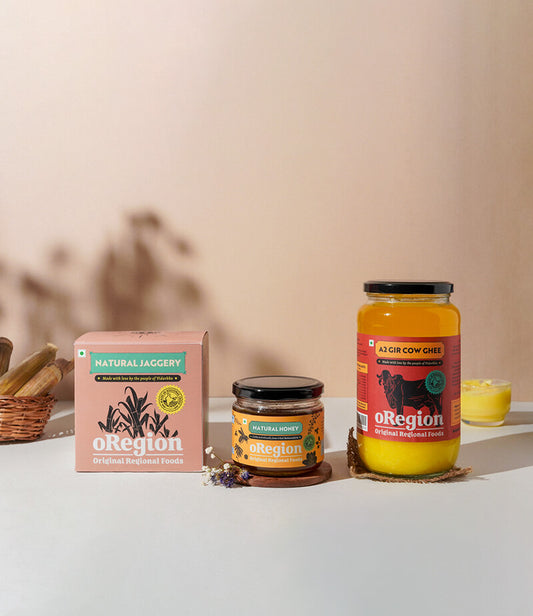
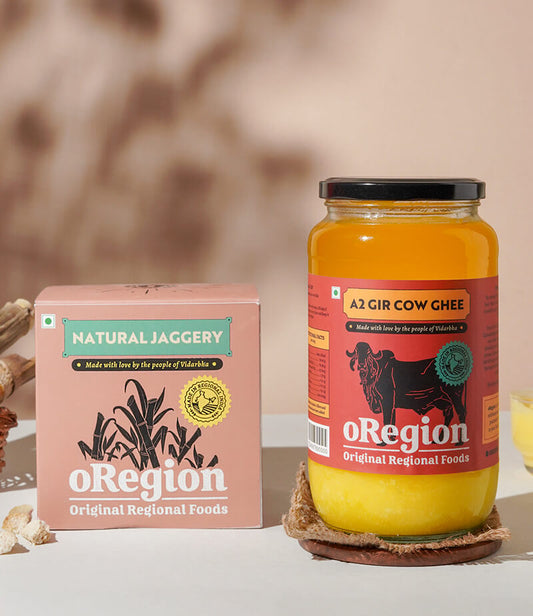
By oregion foodsThere is something deeply comforting about a glass of warm milk sweetened with Natural Sugarcane Jaggery (Gur). It reminds us of winter evenings, grandma’s kitchen, and the simple wisdom of traditional Indian Healthy Foods. Unlike refined sugar, Natural Jaggery carries a rich aroma, earthy sweetness, and the promise of nourishment.
But then it happens.
You stir jaggery into hot milk… and within seconds, the milk splits.
Confusion follows.
Was the milk bad?
Was the jaggery impure?
Is “Chemical Free Jaggery” really chemical free?
This small kitchen moment has sparked a big question in countless homes:
Does pure jaggery curdle milk?
Many people assume curdling means the Gur is adulterated. Others believe all jaggery is incompatible with milk. And in today’s market filled with labels like Organic Jaggery Online, Healthy Foods Online, and Best Jaggery Brand in India, it becomes difficult to separate truth from marketing.
The reality is far more interesting — and surprisingly scientific.
In this detailed guide, we will walk you through the real reasons milk reacts with jaggery, uncover the truth behind misleading “organic” claims, explain how chemicals like sulfur and soda affect your drink, and reveal why traditional purification methods, such as Okra Pulp in Jaggery, make a difference.
Because when we talk about sweetness, we are not just talking about taste — we are talking about trust, health, and informed choices for every family.
Let’s understand what is really happening inside that glass of milk.
Why Does Jaggery Curdle Milk?
Milk curdling after adding Gur (Jaggery) is something many families observe, especially while preparing evening tea or haldi doodh. It often creates doubt about purity. However, the science behind this reaction is more nuanced than simply calling the jaggery “bad.”
Milk is a complex emulsion made of water, fats, lactose, minerals, and most importantly, proteins. The primary protein responsible for stability is casein. Casein exists in milk as tiny micelles suspended evenly in liquid. These micelles remain stable when:
-
The pH level stays close to neutral (around 6.5–6.7)
-
The temperature is controlled
-
There are no strong reactive compounds introduced suddenly
When jaggery is added to very hot milk, two scientific processes begin simultaneously:
-
Acidic Influence – Natural sugarcane jaggery contains mild organic acids such as malic acid and small quantities of plant-derived acidic compounds.
-
Thermal Sensitivity – Heat increases molecular movement, making casein micelles more unstable.
As jaggery lowers the pH even slightly, casein proteins lose their stable structure. They begin clustering together, forming visible clumps. This appears as curdling.
Importantly, even pure Natural Jaggery can cause mild curdling under high heat. That does not automatically mean impurity.
However, the severity of curdling depends heavily on manufacturing methods.
Read More: Panchaamrit: Healing Secrets of Five Sacred Ingredients
Why Temperature Makes the Reaction Stronger
Heat accelerates chemical reactions. When jaggery is added to:
-
Boiling milk
-
Overheated tea
-
Freshly boiled haldi milk
The proteins in milk are already structurally vulnerable due to high thermal agitation. Introducing jaggery at this stage intensifies:
-
pH shift
-
Mineral interaction
-
Protein destabilization
This is why milk sometimes splits instantly when Gur is added to boiling liquid.
If milk is allowed to cool for 2–3 minutes, the reaction is significantly reduced.
Temperature management alone can prevent many cases of curdling.
Is It Always Because of Impurities?
Not necessarily. However, impurities and processing chemicals make the reaction severe and instant.
In commercial markets, many manufacturers use chemicals for faster production and attractive color.
These include:
-
Sulfur dioxide
-
Soda (sodium carbonate)
-
Calcium oxide (lime)
-
Artificial bleaching agents
These substances disturb milk proteins drastically, causing immediate splitting.
When families experience rapid curdling, it is often linked to Chemical Free Jaggery claims that are misleading.
Misconceptions About “Organic” and “Chemical Free Jaggery”
One of the biggest misunderstandings in the Healthy Foods market revolves around labeling.
Today, markets are filled with packaging that claims:
-
Chemical Free Jaggery
-
Pure Gur
-
Natural sugarcane jaggery
-
Best Jaggery Brand in India
-
Organic Jaggery Online
But what do these claims actually mean?
The Misleading Reality
In nearly 90% of commercial cases, manufacturers write “chemical-free” simply because:
-
They did not use chemicals in the final stage of molding
-
They reduced the sulfur quantity
-
They avoided bleaching in packaging
However, they still use:
-
Chemically grown sugarcane
-
Synthetic fertilizers
-
Sulfur-based clarification
-
Soda-based foam removal
This is misleading.
What Real Organic Jaggery Actually Means
For jaggery to be genuinely organic and truly Chemical Free Jaggery, two conditions must be fulfilled:
1. Organic Sugarcane Cultivation
-
No synthetic fertilizers
-
No pesticide residues
-
Soil treated naturally
2. Chemical-Free Purification Process
-
No sulfur
-
No soda
-
No lime
-
No synthetic clarifiers
If either of these steps is missing, the jaggery cannot be called truly organic.
True Natural Jaggery is both farm-pure and process-pure.
Read More: Choose Pure Honey & Jaggery: Avoid Adulteration
Cheaper Cost Means Cheaper Alternatives
In the world of Buy Jaggery Online, price can reveal hidden compromises.
Authentic Natural sugarcane jaggery requires:
-
High-quality organic sugarcane
-
Manual boiling in iron pans
-
Slow evaporation
-
Natural clarifiers like Okra Pulp
-
Skilled labor
These factors increase production cost.
If you see jaggery priced extremely low compared to the market average, it often indicates:
-
Chemically accelerated production
-
Industrial shortcuts
-
Artificial color enhancement
-
Lower-grade sugarcane
High-quality Organic Jaggery Online cannot be produced at industrial rates without compromising either purity or process integrity.
In premium Healthy Foods production, cost reflects authenticity.
How Jaggery Is Manufactured — The Scientific Breakdown
Understanding the jaggery manufacturing process clarifies everything.
Traditional Jaggery Manufacturing
-
Sugarcane is crushed immediately after harvesting.
-
Fresh juice is extracted.
-
Juice is transferred into wide iron pans.
-
Natural clarifiers are added during boiling.
-
Impurities are skimmed off manually.
-
Thickened syrup is poured into molds.
This process retains:
-
Natural iron
-
Magnesium
-
Micronutrients
-
Authentic earthy flavor
Traditional Gur contains a mineral complexity that white sugar lacks.
Commercial Shortcut Manufacturing
To make jaggery:
-
Lighter in color
-
Brighter and shinier
-
Faster to produce
-
Longer lasting
Manufacturers often use:
-
Sulfur dioxide
-
Soda (sodium carbonate)
-
Calcium oxide (lime)
-
Artificial bleaching compounds
While these methods increase speed and appearance appeal, they disturb the natural chemistry of jaggery.
How Sulfur and Soda Cause Milk to Curdle
Now, let’s connect manufacturing with milk splitting.
Milk contains casein protein. Casein remains stable at a balanced pH.
When chemically treated jaggery containing sulfur or soda is added to hot milk:
-
Sulfur increases the acidity imbalance
-
Soda changes the mineral ion interaction
-
Lime disrupts protein stability
-
Heat accelerates the reaction
This combination causes instant coagulation.
So when families report that milk splits immediately after adding Gur, the cause is often chemical treatment — not natural purity.
Even pure jaggery may mildly curdle milk due to natural organic acids, but aggressive splitting indicates chemical involvement.
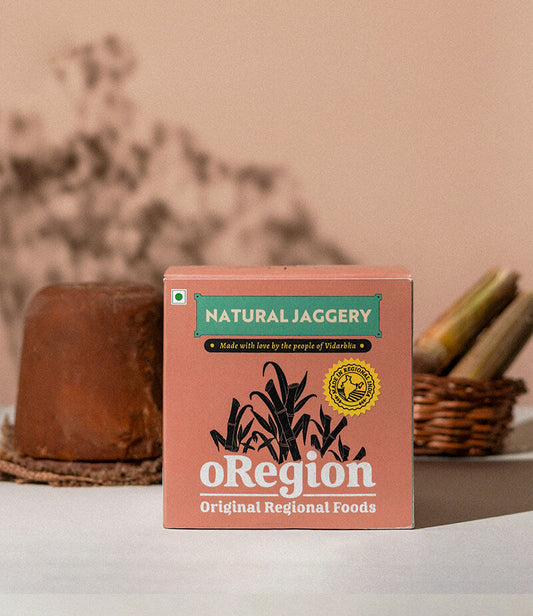
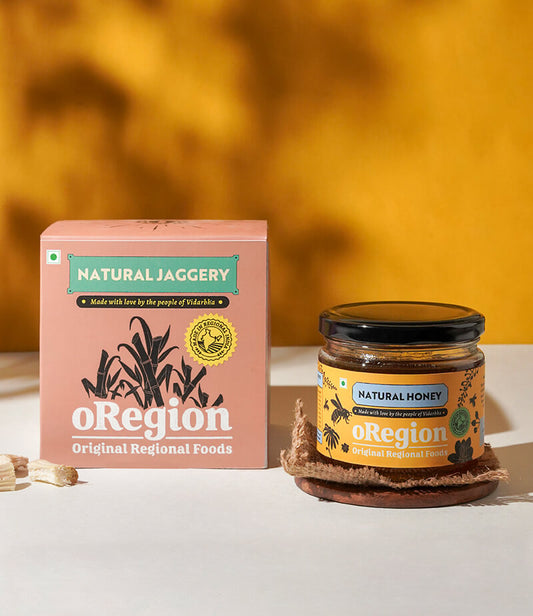
Why oRegion Jaggery Is Pure
At oRegion, we understand that trust in Healthy Foods Online comes from transparency.
We do not rely on sulfur, soda, or lime.
Instead, we use a traditional, time-tested plant-based purification method:
Okra Pulp in Jaggery Production
What Is Okra Pulp?
Okra contains a natural mucilage (gel-like fiber). This sticky substance binds impurities when added during boiling.
How to Use Okra Pulp in Jaggery Manufacturing
-
Fresh okra pods are crushed
-
Mucilage is extracted
-
It is added to boiling sugarcane juice
-
Impurities bind to the pulp
-
Scum floats and is removed manually
This eliminates the need for harmful chemical clarifiers.
Okra Pulp in Jaggery Benefits
Using Okra Pulp in Jaggery offers:
-
Natural purification
-
Preserved mineral integrity
-
Balanced pH compatibility
-
No chemical residue
-
Reduced aggressive curdling in milk
This is true Chemical Free Jaggery in the authentic sense.
Lab-Tested Assurance — Absence of Soda Certificate
Transparency builds credibility.
That is why oRegion provides a test certificate clearly showing:
-
Absence of soda
-
No sulfur residue
-
No artificial bleaching
-
No synthetic clarification agents
This certification assures families that they are choosing one of the Best Organic Jaggery Brand in India options backed by laboratory verification — not marketing claims.
Read More: Truth About Food Adulteration in India
Gur Health Benefits — When Purity Is Guaranteed
Pure Natural Jaggery provides:
-
Iron content
-
Trace minerals
-
Digestive stimulation
-
Lower processing compared to refined sugar
Jaggery for Weight Loss can support reduced refined sugar intake when consumed moderately.
However, benefits depend entirely on purity.
How to Identify the Best Jaggery Brand in India
Buying jaggery today is not just about sweetness. It is about purity, farming practices, and processing transparency. With so many brands claiming to offer Chemical Free Jaggery and Organic Jaggery Online, consumers need a simple way to evaluate quality before they buy Jaggery Online.
Quick Evaluation Chart for Buying Jaggery Online
|
Quality Factor |
What Premium Organic Jaggery Should Have |
Warning Signs of Low Quality Jaggery |
|
Sugarcane Source |
Organically grown sugarcane without synthetic fertilizers |
No mention of farming source |
|
Processing Method |
Natural clarification without sulfur, soda, or lime |
Sulfur treated or chemically clarified |
|
Lab Certification |
Lab report confirming absence of soda and sulfur |
No testing proof available |
|
Color |
Earthy brown, slightly uneven natural shade |
Bright yellow or overly golden |
|
Texture |
Slightly grainy or matte surface |
Artificial shine or polished finish |
|
Aroma |
Mild, warm, natural caramel like smell |
Sharp chemical or artificial odor |
|
Price Point |
Reflects traditional slow boiling and quality sourcing |
Extremely cheap compared to the market average |
How to Prevent Milk from Curdling
Even premium jaggery requires correct usage:
-
Turn off heat before adding jaggery.
-
Let milk cool for 2–3 minutes.
-
Use powdered jaggery for gradual dissolving.
-
Prepare jaggery syrup separately if needed.
-
Choose verified Chemical Free Jaggery.
Conclusion — Clarity, Science, and Authenticity
Milk curdling with jaggery is influenced by:
-
Natural acidity
-
Heat
-
Chemical processing
-
Purification method
The biggest misconception lies in believing that all “chemical-free” labeled jaggery is truly organic.
Real purity requires:
-
Organic sugarcane
-
Chemical-free boiling
-
Natural clarification like Okra Pulp in Jaggery
-
Lab-tested absence of soda
At oRegion, we prioritize transparent sourcing, natural processing, and documented quality standards — helping families confidently choose authentic Healthy Foods.
Because purity is not a label.
Follow us for more wellness tips
👉 Buy Now on oregion.in
📸 Instagram: @oRegion.in
📘 Facebook: facebook.com/oRegionfoods
▶ YouTube: https://www.youtube.com/@oRegion_foods