



What Happens If You Eat Ghee Daily for 30 Days? Benefits & Side Effects
By oregion foodsEating ghee daily has been a part of Indian kitchens for centuries, deeply rooted in Ayurveda, culture, and everyday nourishment. From village households to temple kitchens, desi ghee has always been valued as more than just a cooking fat it is considered food, medicine, and energy combined.
Today, with growing awareness around A2 Gir Cow Ghee, many health-conscious individuals ask a simple but important question:
What actually happens if you eat ghee every day for 30 days?
At oRegion, we believe the answer lies at the intersection of science, tradition, and mindful consumption. In this article, we explore what daily ghee intake can do for your body over 30 days its benefits, possible side effects, and why quality matters more than quantity.
Understanding Ghee – More Than Just a Cooking Fat
Ghee is clarified butter made by gently simmering butter until water evaporates and milk solids separate. What remains is a pure, golden fat with a rich aroma and high nutritional value. Unlike refined oils, ghee is minimally processed and naturally stable at cooking temperatures.
When prepared traditionally using the Bilona method, ghee retains its nutritional integrity, making it suitable for daily consumption across all age groups. This is why desi ghee, especially A2 Gir Cow Ghee, holds a special place in Ayurveda and modern nutrition alike.
What Makes A2 Ghee Different?
Not all ghee is the same. The difference begins with the milk.
A2 Ghee is made from the milk of indigenous Indian cows such as Gir cows, which naturally produce A2 beta-casein protein. This protein is considered easier to digest and closer to what our ancestors consumed for generations.
In contrast, milk from crossbred or foreign cows contains A1 protein, which some people find harder to digest. This distinction is why A2 cow ghee is often recommended for regular use.
Why Gir Cow Ghee Is Highly Valued
Gir cow ghee is prized for several reasons:
-
Derived from indigenous Indian desi cows
-
Naturally rich in healthy fats and fat-soluble vitamins
-
Easier to digest than regular butter or refined fats
-
Preferred in Ayurveda for daily consumption and healing
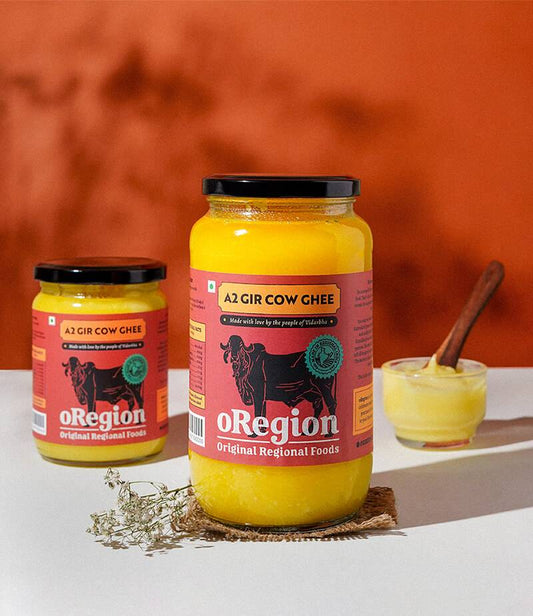
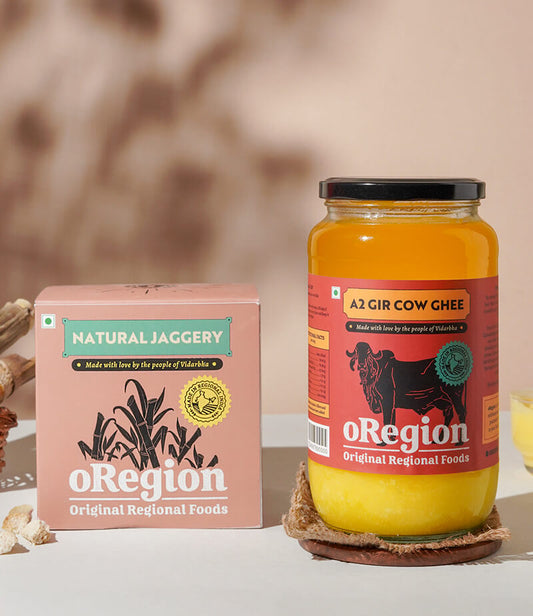
At oRegion, our Gir Cow Ghee is prepared using time-honoured practices that preserve purity, nutrition, and authentic taste just as nature intended.
What Happens in Your Body When You Eat Ghee Daily for 30 Days?
When consumed in moderation about 1 to 2 tablespoons per day ghee can positively influence multiple systems in the body. Let’s look at what typically happens week by week.
Week 1 – Improved Digestion and Gut Comfort
One of the earliest changes people notice after including ghee daily is better digestion. Meals feel lighter, bowel movements become more regular, and gut discomfort often reduces.
Role of Butyric Acid in Gut Health
Ghee is a natural source of butyric acid, a short-chain fatty acid that plays a key role in digestive health. It:
-
Nourishes intestinal cells
-
Supports the gut lining
-
Helps relieve constipation
-
Encourages healthy gut bacteria
This makes A2 desi cow ghee particularly beneficial for people with sensitive digestion or irregular eating habits. Ayurveda has long used ghee as a carrier that improves nutrient assimilation, and modern science now supports this wisdom.
Week 2 – Better Nutrient Absorption
By the second week, your body becomes more efficient at absorbing nutrients from food, especially vitamins that require fat for absorption.
Fat-Soluble Vitamins Absorption
Ghee supports the absorption of:
-
Vitamin A – eye health and immunity
-
Vitamin D – bone strength and calcium absorption
-
Vitamin E – antioxidant protection
-
Vitamin K – proper calcium metabolism and heart health
Adding organic A2 cow ghee to vegetables, grains, and dals enhances their nutritional value. This is one reason ghee has been traditionally added to simple meals like khichdi or rice.
Week 3 – Sustained Energy & Metabolism Support
By the third week, many people report more stable energy levels throughout the day. Unlike refined oils or sugary foods, ghee provides slow, sustained energy.
How MCTs Support Metabolism
Ghee contains medium-chain fatty acids (MCTs) that:
-
They are quickly converted into energy
-
They are less likely to be stored as body fat
-
Help reduce sudden hunger cravings
This metabolic support is why the best A2 bilona ghee in India is often recommended for active individuals, working professionals, and those following traditional or holistic diets.
Week 4 – Visible Skin, Hair & Joint Benefits
By the fourth week, the benefits often become visible on the outside. Ayurveda teaches that true beauty comes from internal nourishment and ghee plays a vital role here.
Natural Glow from Within
Daily intake of pure A2 ghee may lead to:
-
Softer, better-hydrated skin
-
Improved skin elasticity
-
Stronger hair texture
-
Reduced dryness and dullness
This internal nourishment reflects externally, making ghee a quiet ally in daily self-care.
Joint Lubrication & Bone Strength
Thanks to its healthy fats and Vitamin K, ghee:
-
Supports joint lubrication
-
Helps maintain calcium balance in bones
-
Aids flexibility and mobility
Desi Gir Cow Ghee has traditionally been used to nourish joints and muscles, especially for ageing individuals and those with physically demanding lifestyles.
Cognitive & Mental Health Benefits of Daily Ghee Intake
Brain Fuel from Healthy Fats
The human brain is nearly 60% fat, and it requires good-quality fats to function optimally. Ghee provides the kind of nourishment the brain recognises and uses efficiently.
Focus, Memory & Emotional Balance
Regular consumption of A2 Gir Cow Ghee supports:
-
Brain cell structure
-
Improved focus and mental clarity
-
Emotional balance and calmness
In Ayurveda, ghee is classified as a medhya rasayana a substance that nourishes intellect, memory, and consciousness.
Is Eating Ghee Daily Safe? Understanding Moderation
Yes, eating ghee daily is generally safe for most people when consumed mindfully. The key lies in moderation and quality.
Recommended Daily Intake
-
1 tablespoon for sedentary individuals
-
1–2 tablespoons for active individuals
Choosing the best ghee in India, such as oRegion Ghee, ensures purity, digestibility, and nutritional integrity.
Read More: The Hidden Secrets of Using A2 Cow Ghee in Winters
Potential Side Effects Only When Overconsumed
While ghee offers many benefits, excess intake without lifestyle balance can create issues.
Unnecessary Weight Gain
Ghee is calorie-dense. Overeating it without physical activity may lead to weight gain. Portion control is essential.
Cholesterol Sensitivity in Some Individuals
High-quality A2 cow ghee is better tolerated than regular fats, but individuals with specific medical conditions should consult a healthcare professional before increasing intake.
When consumed responsibly, organic ghee supports wellness rather than harming it.
Why Quality Matters – Choosing the Best Ghee for Daily Use
Not all ghee delivers the same benefits. Quality depends on sourcing, preparation, and transparency.
What Defines the Best A2 Gir Cow Ghee?
Traditional Bilona Method
-
Slow churning of curd
-
Low-heat processing
-
Preserves enzymes and nutrients
Source Transparency
-
Indigenous Gir cows
-
Ethical farming practices
-
No chemicals, additives, or preservatives
oRegion A2 Gir Cow Bilona Ghee meets these standards with consistency and care.
Why oRegion Ghee Is Ideal for Daily Consumption
When ghee becomes part of your daily routine, its quality matters as much as quantity. Daily consumption demands a ghee that is clean, digestible, ethically sourced, and nutritionally intact. This is where oRegion Ghee stands apart.
At oRegion, we do not treat ghee as a mass-produced commodity. We treat it as a daily nourishment, meant to support digestion, energy, and long-term wellness without burdening the body.
Our approach focuses on three non-negotiable principles: purity, tradition, and trust.
What Sets oRegion Apart?
1. Made from A2 Gir Cow Milk
oRegion Ghee is prepared exclusively from the milk of indigenous Gir cows, which naturally produce A2 beta-casein protein. Research and traditional wisdom both suggest that A2 milk is easier to digest and more suitable for long-term consumption compared to A1 milk from crossbred cows.
This makes oRegion Gir Cow Ghee a safer and more compatible option for daily intake across age groups.
2. Prepared Using the Traditional Bilona Method
Unlike commercial ghee made from cream using high heat, oRegion follows the Bilona method a slow, traditional process where:
-
Curd is churned to extract butter
-
Butter is gently heated on a low flame
-
Nutrients remain stable and intact
This method preserves butyric acid, fat-soluble vitamins (A, D, E, K), and natural enzymes that refined ghee often loses.
3. Naturally Aromatic with a Grainy Texture
Authentic A2 Bilona Ghee has a natural aroma and granular texture both indicators of purity. These characteristics are not cosmetic; they reflect slow processing, correct temperature control, and real milk fat structure.
4. Trusted by Health-Conscious Families Across India
Families who consume ghee daily look for consistency and safety. oRegion Ghee has earned trust because it delivers the same purity in every batch without additives, preservatives, or shortcuts.
Whether you are searching for pure Gir cow ghee, organic A2 desi cow ghee, or the best A2 cow ghee for daily use, oRegion provides a dependable choice rooted in both tradition and nutritional science.
How to Consume Ghee Daily (Practical Tips)
Daily ghee consumption works best when integrated naturally into meals rather than treated as a supplement. Traditional Indian diets already offer practical ways to include ghee without excess.
Best Ways to Add Ghee to Your Diet
With warm roti or rice
Adding a small spoon of ghee improves taste and enhances digestion. Ayurveda recommends ghee with warm foods because it supports agni (digestive fire).
Mixed into dal or khichdi
Ghee acts as a nutrient carrier, helping the body absorb minerals and vitamins from lentils and grains.
Added to cooked vegetables
Vegetables contain fat-soluble nutrients that are better absorbed when consumed with healthy fats like A2 cow ghee.
Early morning with warm water (traditional practice)
In small quantities, this practice is believed to gently stimulate digestion and lubricate internal tissues, especially beneficial for individuals with dryness or sluggish digestion.
Avoid Heating Ghee at Very High Temperatures
Although ghee is heat-stable, repeated overheating can reduce its nutritional value. Using ghee on low to medium heat preserves its aroma, antioxidants, and beneficial fatty acids, making it more suitable for daily cooking.
Ghee vs Refined Oils – A Smarter Daily Choice
Modern eating habits have shifted heavily toward refined vegetable oils, largely due to convenience, marketing, and misconceptions around fat. However, long-term dependence on refined oils may place unnecessary stress on digestion and metabolism. When we compare traditional ghee with industrially refined oils, the differences become clear not just nutritionally, but physiologically.
Ghee has been consumed for thousands of years in Indian diets, while refined oils are a relatively recent invention. This historical context matters because the human digestive system adapts best to foods it has evolved with.
Read More: This Magic Drink Boosts Immunity & Sleep Naturally
How Processing Impacts Health
Refined oils are typically produced using high heat, chemical solvents (such as hexane), bleaching agents, and deodorisation processes. These steps strip away natural antioxidants, vitamins, and fatty acid balance, leaving behind a calorie-dense but nutritionally weak product.
Ghee, especially A2 Gir Cow Bilona Ghee, is prepared using slow, natural methods that retain fat-soluble vitamins (A, D, E, K) and beneficial fatty acids like butyric acid. This makes ghee a functional food rather than an empty fat.
Nutritional and Digestive Comparison
|
Aspect |
Ghee |
Refined Oils |
|
Processing |
Natural, traditional |
Chemical extraction |
|
Nutrition |
Rich in vitamins & healthy fats |
Nutrient-poor |
|
Digestion |
Easy and supportive |
Heavy for the gut |
|
Stability |
Heat stable |
Oxidises easily |
One major advantage of ghee is oxidative stability. Ghee remains stable even at higher cooking temperatures, whereas refined oils oxidise easily, producing harmful free radicals. Over time, this oxidative stress may contribute to inflammation and metabolic imbalance.
This is why many nutritionists, functional medicine experts, and traditional health systems increasingly recommend desi ghee over refined oils for everyday cooking especially for families, children, and older adults.
FAQs – People Also Ask
Is it safe to eat ghee daily for 30 days?
Yes. Consuming 1–2 tablespoons of A2 ghee daily is generally safe and beneficial for most people when paired with a balanced diet and active lifestyle.
Which is the best ghee for daily consumption?
A2 Gir Cow Bilona Ghee, particularly from trusted brands like oRegion Ghee, is considered one of the best options due to its digestibility, purity, and traditional preparation.
Does ghee increase weight?
Ghee only contributes to weight gain when consumed in excess. In moderation, it supports metabolism, improves satiety, and may reduce unhealthy snacking.
What is the price of Gir Cow Ghee?
Gir cow ghee price varies based on sourcing, cow breed, and preparation method. Premium Bilona ghee costs more because of ethical farming, traditional processing, and higher nutritional value.
Is A2 ghee better than normal ghee?
Yes. A2 cow ghee is easier to digest and aligns closely with Ayurvedic dietary principles, making it more suitable for daily consumption.
Can I eat ghee daily for skin and hair?
Yes. Organic A2 ghee nourishes the body internally, which often reflects in improved skin hydration, hair strength, and reduced dryness over time.
Final Thoughts – 30 Days with Ghee Can Be Transformative
Eating ghee daily for 30 days can become a powerful wellness habit when done mindfully and with high-quality A2 Ghee. The benefits go far beyond digestion, supporting sustained energy, mental clarity, joint comfort, skin health, and overall vitality.
What truly determines the outcome of daily ghee consumption is three essential fundamentals:
-
Purity – clean, unadulterated ghee free from chemicals
-
Moderation – correct daily quantity suited to lifestyle
-
Authentic sourcing – indigenous cows and traditional methods
When these elements come together, ghee transforms from a simple cooking fat into a daily nutritional ally that supports the body holistically.
For those choosing ghee as part of a long-term wellness routine, oRegion A2 Gir Cow Ghee represents a thoughtful balance of ancient wisdom and modern nutritional understanding making every spoonful meaningful, safe, and purposeful.
Follow us for more wellness tips
👉 Buy Now on oregion.in
📸 Instagram: @oRegion.in
📘 Facebook: facebook.com/oRegionfoods
▶ YouTube: https://www.youtube.com/@oRegion_foods